Ever grabbed a water bottle that looked perfect online, only to find it doesn’t fit in your car’s cup holder? Or bought one so tall it falls out of your backpack pocket every five minutes? You’re not alone. Getting the water bottle dimensions right saves you money, frustration, and a whole lot of spilt water.
This guide breaks down every water bottle size, from the tiny 8 oz to the big 2-liter beast, so you pick the right one the first time.
Dimensions of a Water Bottle
Most people never think about water bottle measurements until the bottle doesn’t fit somewhere it should. The basics you need to know are height, diameter, and capacity. These three numbers tell you everything about whether a bottle works for your life.
Standard water bottle dimensions
Range from about 5.5 inches tall for an 8 oz bottle up to 12.5 inches for a 2-liter bottle. The diameter usually sits between 2.25 inches and 4 inches depending on how much it holds.
Standard Water Bottle Dimensions Table
Here’s your quick reference for water bottle size chart data in both inches and centimeters:
| Capacity | Height (in) | Diameter (in) | Height (cm) | Diameter (cm) |
| 8 oz (237 ml) | 5.5 in | 2.25 in | 14 cm | 5.7 cm |
| 12 oz (355 ml) | 7 in | 2.5 in | 17.8 cm | 6.4 cm |
| 16.9 oz (500 ml) | 8 in | 2.5 in | 20.3 cm | 6.4 cm |
| 20 oz (591 ml) | 8.9 in | 2.75 in | 22.6 cm | 7 cm |
| 1 Liter (33.8 oz) | 11 in | 3 in | 27.9 cm | 7.6 cm |
| 1.5 Liter | 12.25 in | 3.5 in | 31.1 cm | 8.9 cm |
| 2 Liter | 12.5 in | 4 in | 31.8 cm | 10.2 cm |
How Many Inches is a Water Bottle?
A 16.9 oz water bottle is about 8 inches tall, which is the most common size you’ll find at any store. Smaller 12 oz bottles sit around 7 inches, while a full 1 liter bottle reaches about 11 inches.
Water bottle height matters because most backpack side pockets max out around 10 to 11 inches. If your bottle is taller, it wobbles, tips, and eventually takes a dive. Knowing the inches before you buy is the kind of boring detail that saves your day.
Plastic Water Bottle Dimensions
Plastic water bottle dimensions tend to run slimmer than steel or insulated bottles because the walls are thinner. A standard 500 ml bottle is 8 inches tall with a 2.5-inch diameter, fitting neatly into most cup holders and bag pockets without a fight.
Larger plastic options like the 1 liter water bottle come in around 10 to 11 inches tall and 3 inches wide. They’re a solid pick for gym sessions or day hikes where you want more water without hauling a massive container.
How Tall is a Water Bottle?
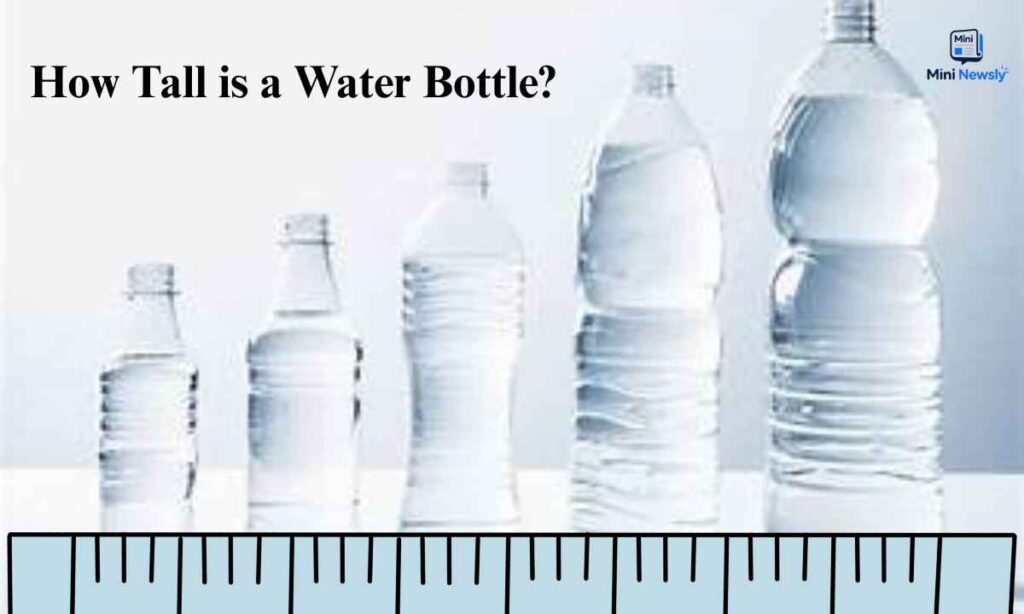
Bottle height scales directly with how much it holds. Short and stubby means less water. Tall and narrow means more water but trickier to store. The sweet spot for most people is the 8 to 10 inch range.
A slim water bottle in the 20 oz range hits about 8.9 inches, which still fits most cup holders. Go much taller and you start running into clearance issues in cars with shallow holders.
Plastic Bottle Cap Size Chart
The bottle cap diameter matters if you ever want to swap lids or use a straw attachment. Here’s how cap sizes break down by bottle size:
| Capacity | Cap Size (in) | Cap Size (mm) |
| 8 oz to 12 oz | 1.0 in | 28 mm |
| 16.9 oz to 20 oz | 1.1 in | 28 mm |
| 1 Liter | 1.2 in | 30 mm |
| 2 Liter | 1.3 in | 33 mm |
Neck diameter and cap size go hand in hand. The 28 mm standard is the most common across single-use plastic bottles, which is why so many aftermarket lids fit interchangeably.
Water Bottle Weight
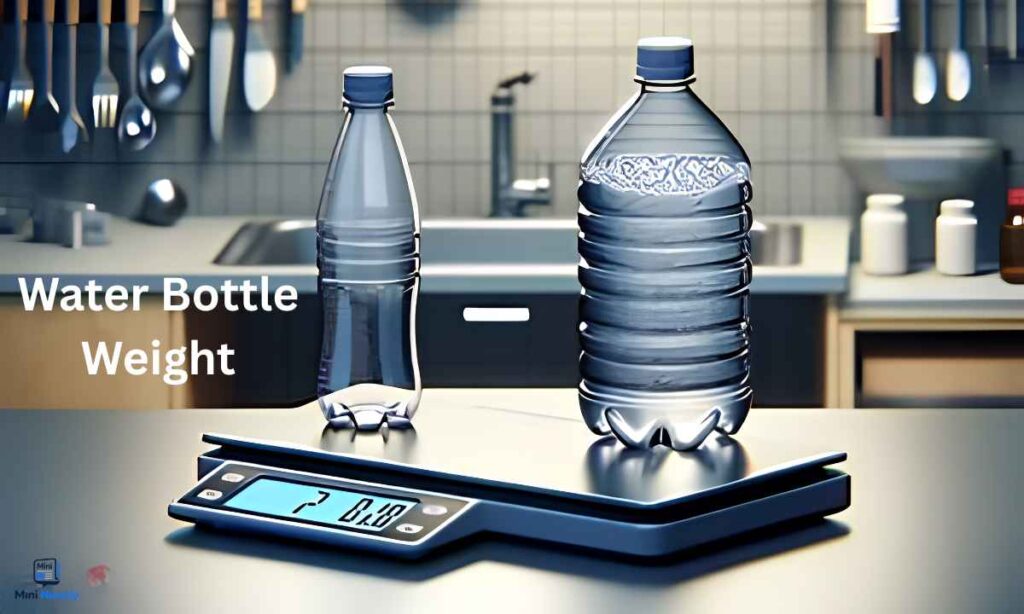
An empty plastic bottle weighs around 15 to 20 grams, basically nothing. Fill a 1 liter bottle and you’re now carrying about 1 kilogram (2.2 lbs). That adds up fast on a long hike.
Stainless steel bottle dimensions bring extra weight even before you add water. A typical 32 oz steel bottle weighs 300 to 350 grams empty, compared to under 30 grams for a plastic bottle of the same size. Worth it for temperature control, but your shoulder knows the difference.
How Many Oz is a Water Bottle?
Water bottle capacity in ounces ranges from 8 oz for small kids’ bottles all the way to 128 oz (one gallon) for the serious hydration crowd. The most common retail size is 16.9 oz, which equals exactly 500 ml.
How Many Oz is a Regular Water Bottle?
The standard water bottle size in most stores is 16.9 oz. It’s the size you grab from a gas station cooler, the one that fits in every cup holder, and the one most people think of when someone says “a water bottle.” Simple, familiar, reliable.
How Many Water Bottles is 1 Liter?
One liter equals 33.8 oz, which is exactly two 16.9 oz bottles. Not “a little more than two” like some sources claim. Two. Even. Done.
Water Bottle Measurement Terminology
Bottle volume is how much liquid it holds. Bottle diameter is the width at the widest point. Bottle height is from the base to the top of the cap. Neck diameter is the opening where you drink from, which is separate from the overall diameter.
Wide mouth bottles typically have a neck opening of 2.2 inches (53 mm), making them easier to fill with ice and clean. Standard mouth bottles sit around 1.3 inches (32 mm), which works better for sipping on the move without splashing yourself.
Dimensions of Popular Water Bottles
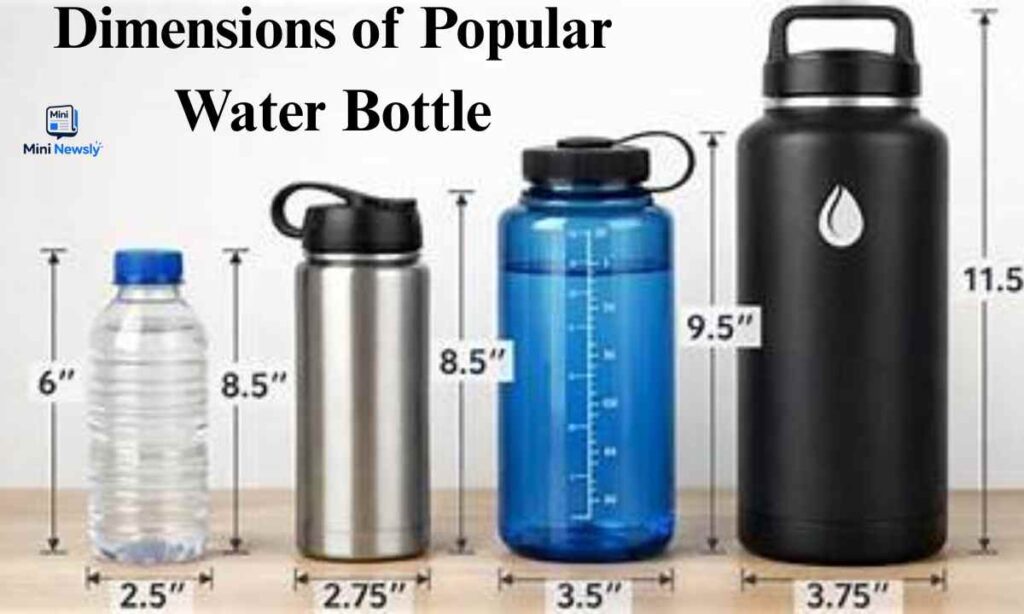
A Hydro Flask 32 oz measures about 9.4 inches tall with a 3.6-inch diameter. A Nalgene 32 oz comes in at 7.5 inches tall but wider at 3.75 inches, making it shorter but chunkier. A standard CamelBak Chute Mag 32 oz sits around 9.8 inches tall.
These differences matter when you’re deciding what fits in your gym bag versus your car. Same capacity, totally different feel in your hand and bag.
Other Common Sizes with Precise Measurements
The 12 oz water bottle is a favorite for kids’ lunchboxes, standing 7 inches tall at 2.5 inches wide. The 20 oz bottle at 8.9 inches is ideal for office desks where you want something substantial but not oversized.
The 32 oz bottle hits around 9 to 10 inches depending on the brand, making it the go-to for gym sessions and half-day hikes. It’s the size most fitness people carry without thinking twice.
Bottle Dimension Comparison
Put a 500 ml bottle next to a 2-liter bottle and the difference is obvious. The 500 ml is portable, fits everywhere, and feels light. The 2-liter is great at a picnic table but awkward in a backpack.
The 1 liter bottle lives in the middle and is honestly the most versatile pick. Tall enough to hold real water, slim enough to fit most bags.
Choosing the Best Water Bottle Size for Different Activities
For the gym, 20 oz to 32 oz is the sweet spot. You get enough water for a solid workout without hauling a tank. For hiking all day, jump to 1 liter or 1.5 liters. For a desk at work, a 500 ml to 20 oz bottle keeps things neat.
Kids do best with 12 oz bottles because they’re light enough to carry in a small backpack without tipping over. For travel, a slim 500 ml that passes through airport security when empty is the smart move.
Average Water Bottle Height and Diameter
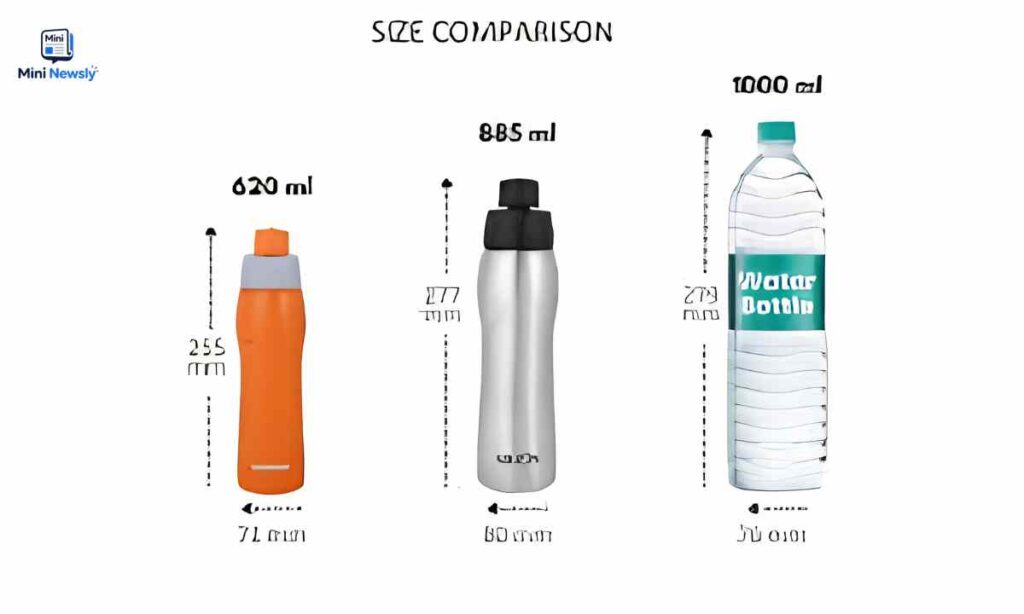
The average water bottle height for everyday use lands between 8 and 10 inches. Average diameter runs 2.5 to 3 inches for most standard bottles.
Anything wider than 3.5 inches starts struggling to fit in cup holders and bag pockets. Keep that number in mind when shopping for insulated bottle dimensions, since those thick walls add to the outer diameter even when the interior holds the same amount.
Water Bottle Size Chart (Inches and Centimeters)
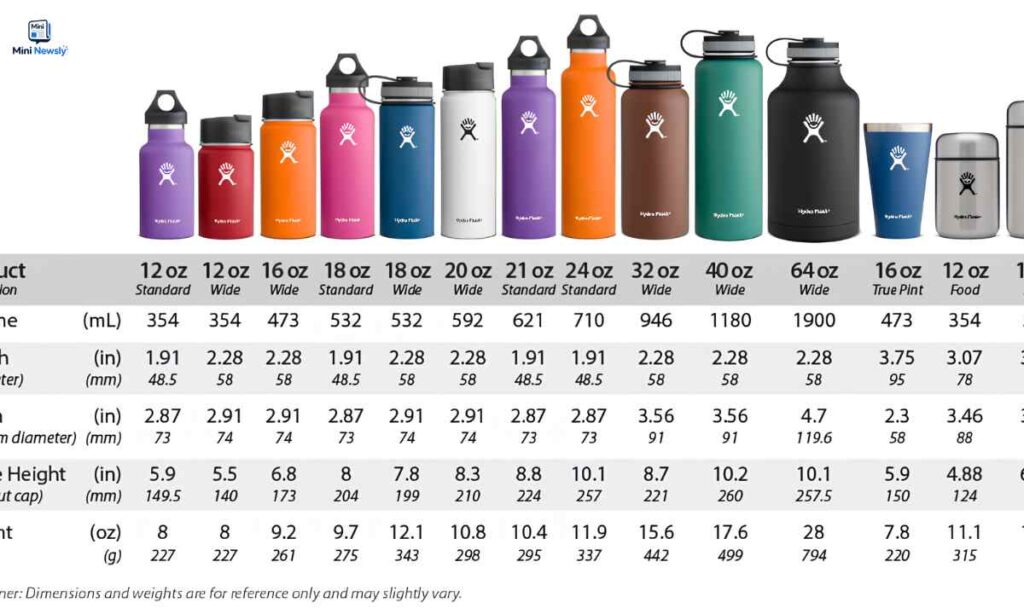
Most US shoppers think in inches. Most product specs come in centimeters. Here’s the fast conversion: 1 inch equals 2.54 cm.
So an 8-inch bottle is 20.3 cm. A 10-inch bottle is 25.4 cm. A 11-inch 1-liter bottle is 27.9 cm. Bookmark that math and you’ll never be confused shopping for international brands again.
Standard Water Bottle Volume by Type
Disposable plastic bottles almost always come in 16.9 oz (500 ml). Reusable bottles usually start at 20 oz and go up to 32 oz or more. Sports bottles designed for cycling or running commonly come in 21 oz (620 ml) to fit standard bike cages.
Insulated bottles for coffee or hot drinks often come in 12 oz, 16 oz, or 20 oz, since most people drink less hot liquid in one sitting than cold water.
Differences Between Plastic and Steel Bottle Sizes
Same capacity, different feel. A plastic 32 oz bottle has thin walls so the outer dimensions are close to the inner volume. A stainless steel 32 oz bottle has thicker walls, making it wider and heavier even though it holds the same water.
BPA-free bottle options exist in both materials now. The trade-off is simple: plastic is lighter and cheaper, steel lasts longer and keeps drinks cold or hot for hours.
Common Water Bottle Sizes Explained
8 oz is for kids or a quick espresso-style water hit. 16.9 oz is your everyday companion. 20 oz covers a gym session. 32 oz gets you through a half day. 1 liter handles a full hike. 2 liters lives on the picnic table.
Pick the size based on how long you’ll be away from a tap, not just what looks cool on a shelf.
How Bottle Shape Affects Water Bottle Dimensions
Two bottles can hold the same water bottle volume but look completely different. A tall slim bottle and a short wide bottle might both be 24 oz. The slim one fits in your cup holder easily. The wide one sits more stable on a desk.
Wide mouth bottles look chunkier because the opening takes up more of the top. Slim water bottles feel more elegant but can be harder to add ice to. Shape is really about your lifestyle, not just aesthetics.
Do Water Bottle Dimensions Affect Cup Holder Fit?
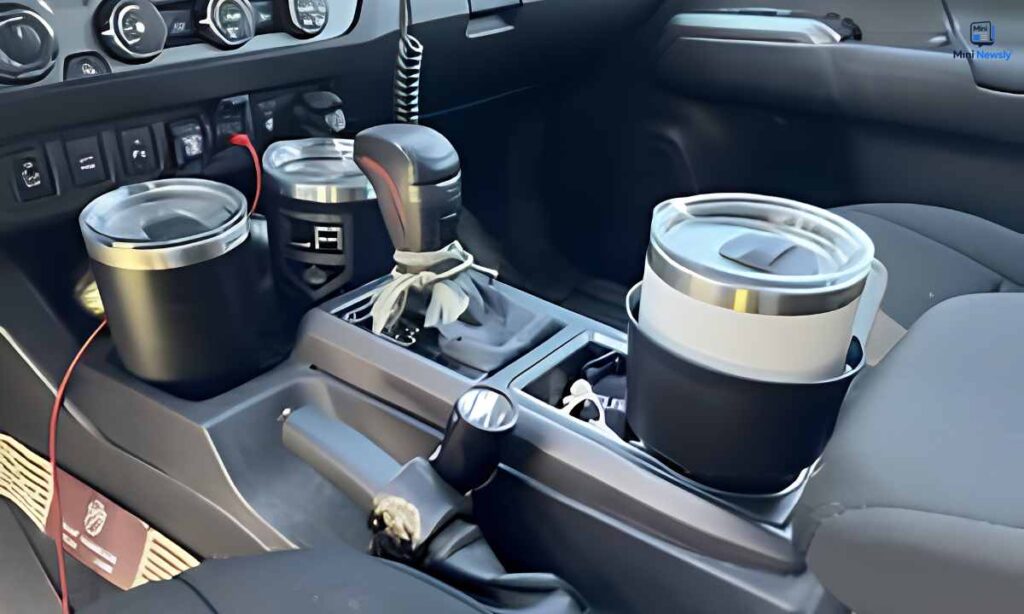
Yes, and this is where people get burned most often. Most car cup holder openings measure between 3 and 3.5 inches in diameter. Bottles with a base diameter under 3 inches fit easily. Go over 3.5 inches and it’s a squeeze or a no-go.
Insulated bottles are the biggest offenders here. A Hydro Flask 40 oz has a base diameter of about 3.8 inches, which won’t fit standard cup holders. Always check the base diameter specifically, not just the widest point of the bottle body.
Reusable Water Bottle Sizes vs Disposable Bottle Sizes
Disposable bottles are designed to be as light and thin as possible: 16.9 oz, slim profile, basic cap. Reusable bottle sizes are built for durability, so they’re heavier, have wider mouths, and often come with more complex lids.
The outer dimensions of a reusable bottle can be half an inch wider than a disposable one holding the same amount, purely because of wall thickness. That half inch is what makes the difference between fitting your cup holder and not.
Tips for Measuring a Water Bottle at Home
Stand the bottle on a flat surface. Use a ruler or measuring tape to measure straight up from the base to the top of the cap. That’s your bottle height.
For bottle diameter, measure straight across the widest part of the bottle body. For capacity, fill it with water and pour into a measuring cup. Now you have all three numbers and you’ll never guess wrong again.
How Water Bottle Dimensions Impact Storage and Portability
A bottle that’s too tall tips out of your backpack. One that’s too wide won’t fit in your gym bag’s side pocket. Portable water bottle size is about matching the bottle to the specific bag or holder you use every day, not just picking the biggest option available.
The most portable hydration solution for most people is a 20 oz slim bottle around 8 to 9 inches tall with a base under 3 inches. It fits everywhere, holds enough water, and doesn’t weigh you down.
Conclusion
Water bottle dimensions are not complicated once you know what to look for. Height tells you if it fits your bag. Diameter tells you if it fits your cup holder. Capacity tells you if it holds enough for your day.
The standard 16.9 oz bottle works for most everyday needs. Go up to 32 oz for the gym or hikes. Keep base diameter under 3.5 inches if cup holder fit matters to you. Measure once, buy right, and stop second-guessing your hydration gear.
Got a bottle that fits perfectly in every bag you own? Drop it in the comments. Someone out there is looking for exactly that recommendation.

Welcome to mininewsly.com, your trusted source for grammar tips and text meanings. I have over 4 years of experience in the grammar and text meaning niche. My goal is to provide clear, accurate, and easy-to-understand content for every reader. Thank you for visiting, and I hope my articles help you learn with confidence.