
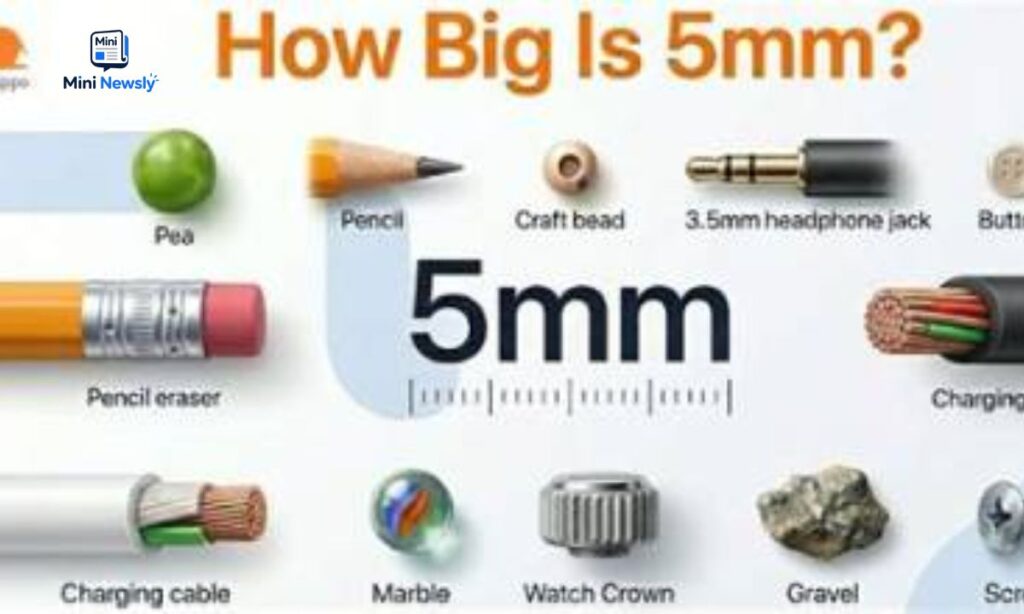
If you searched “how big is 5mm,” you probably want a fast, clear answer. Here it is. 5mm size equals about 0.5 centimeters or 0.197 inches. That is roughly the width of a pencil eraser or a small green pea.
Numbers alone rarely help. Most people ask how big is 5mm because they want to picture it, not just read a 5mm measurement on a screen. So this guide skips the dry math and shows you real objects you already know.
By the end, you will know exactly how big is 5mm without needing a ruler in your hand. You will also learn how to estimate it using your fingers, coins, and things sitting around your house right now.
How Big Is 5mm?
How big is 5mm? It equals 0.5 centimeters, which also equals 0.197 inches. On a standard ruler, 5mm sits exactly halfway between the 0 and 1 centimeter marks.
That makes it one of the smaller metric measurement units people deal with day to day, but it is not so small that you need a magnifying glass. You can see it and feel it between two fingers without much trouble.
Here is a quick way to picture 5mm in different contexts:
| Unit | Value |
| Centimeters | 0.5 cm |
| Meters | 0.005 m |
| Inches | 0.197 in |
| Feet | 0.016 ft |
So when someone asks how big is 5mm in inches, the answer is about a fifth of an inch. And how big is 5mm in cm comes out to exactly half a centimeter. Keep both of those numbers in mind, since they come up again and again in this guide.
How to Estimate 5mm Without a Ruler
You do not need a ruler to guess 5mm fairly closely. Your own hands, some spare coins, and a few kitchen items can get you there. This section covers three simple methods you can try right now.
Using Your Fingers
Look at your fingernail. The width of the pinky nail on most adults sits close to 5mm across the base. That gives you a rough, always available reference.
This trick will not replace a real ruler for precise work. But for quick estimates, like checking if a screw or bead looks about right, your fingernail works fine.
Using Coins or Cards
A US nickel is about 1.95mm thick, so stacking roughly two and a half nickels gets you close to 5mm. A standard credit card is about 0.76mm thick, so five stacked cards land near 3.8mm, which is a bit short of 5mm but still a useful visual.
These household comparisons are handy because almost everyone has coins or cards nearby. Try stacking a few and see how the height compares to the objects listed further down this page.
Using Everyday Objects
A green pea, a pencil eraser, or a small button all sit close to the 5mm mark. These are the fastest visual shortcuts for understanding 5mm real life examples without any tools.
Keep one of these objects nearby as you read the rest of this guide. It will make every comparison below click faster.
Quick Comparison Table
Here is a snapshot of the 10 objects covered in this article, along with their typical size range. Real world objects are rarely a perfect 5.00mm, so the ranges below reflect natural variation you would actually find.
| Common Item | Typical Size |
| Green Pea Diameter | 5 to 8mm |
| Pencil Eraser Width | 5 to 6mm |
| Small Craft Bead | 4 to 6mm |
| Headphone Jack Opening | 3.5 to 6mm |
| Tiny Button Width | 5 to 7mm |
| Thick Cable Width | 4 to 6mm |
| Small Marble Size | 5 to 8mm |
| Watch Crown Width | 4 to 6mm |
| Coarse Gravel Piece | 4 to 8mm |
| Small Seed | 3 to 6mm |
This table gives you a 5mm comparison at a glance. Below, each object gets its own breakdown so you understand exactly why it made the list.
1. Green Pea Diameter

A single green pea is one of the easiest ways to answer how big is 5mm. Fresh peas typically run between 5 and 8mm across, which puts the smaller ones right at our target size.
Grab a handful from the fridge or a can and roll one between your fingers. You will notice it feels small but round and solid, not flat like a coin.
This comparison works well because almost every kitchen has peas somewhere. It also helps when shopping for small round beads or hardware, since a pea gives your eyes a mental anchor for that exact scale.
Also, read this Blog: How Long Is 10 Inches? 13 Common Things to Help You Visualize It
2. Pencil Eraser Width
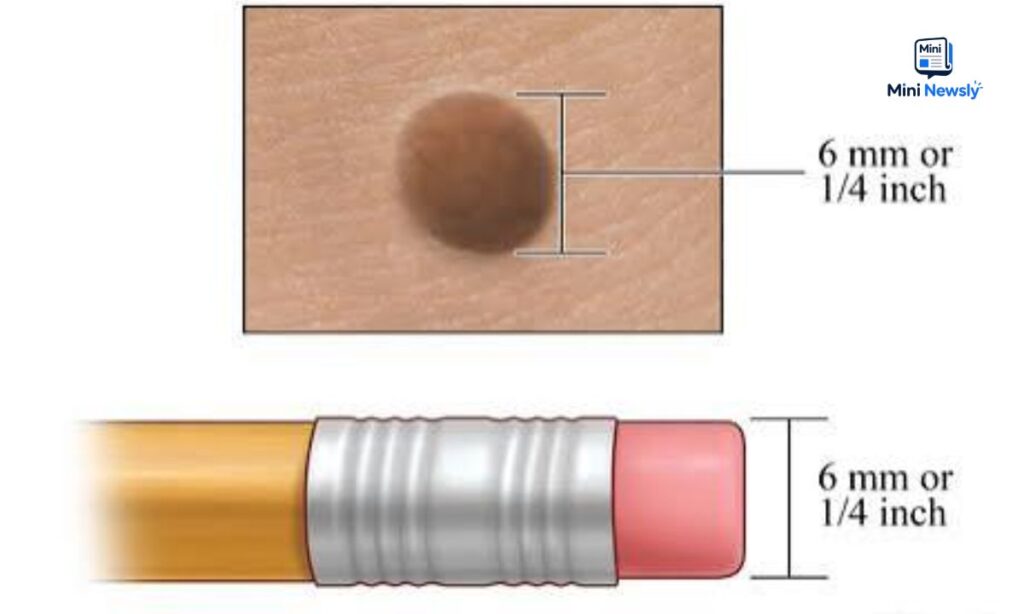
The pink eraser on the end of a standard pencil usually measures close to 5 to 6mm across. That makes it one of the most reliable 5mm pencil eraser comparisons around, since almost everyone has one within reach.
Pull out any pencil and look at the flat end. The width you see there is about as close to 5mm as you will find without pulling out a ruler. This example is useful beyond pure curiosity too. If you are shopping for small parts online, like tiny screws or gaskets, comparing them mentally to an eraser tip gives you a quick gut check before you buy.
3. Small Craft Bead

Craft beads used in bracelets and necklaces often measure between 4 and 6mm. A 5mm craft bead sits right in the middle of that popular size range, which is why so many jewelry patterns call for it by name. Pour a handful of beads onto a table and you will notice how consistent that size looks. It is big enough to see the color and shine clearly, but small enough to fit close together on a string.
If you sew or make jewelry, this comparison matters more than the others. A size difference of even 1mm can throw off an entire bracelet pattern, so knowing what 5mm actually looks like saves you from ordering the wrong beads twice.
4. Headphone Jack Opening

Older wired headphone jacks vary in width depending on the plug type, generally landing between 3.5 and 6mm. The classic 3.5mm audio jack is smaller than 5mm, but many charging ports and adapter openings sit right around this 5mm headphone jack range.
Check the end of an old pair of wired earbuds if you have one. The metal tip gives you a small, cylindral object that is easy to compare against other round items on this list. Electronics manufacturers care deeply about these small differences. A gap of even half a millimeter can mean a cable that will not fit securely, which is why millimeter precision matters so much in gadget design.
5. Tiny Button Width
Small shirt buttons and doll clothing buttons often measure 5 to 7mm across. A 5mm button sits toward the smaller end of that group, making it popular for delicate sewing work. Check a dress shirt or a baby onesie and you will likely spot buttons in this exact range. They are small enough to look neat but still large enough to grip and fasten without frustration.
Sewing supply stores usually list button sizes in millimeters for this reason. Knowing how big is 5mm in real terms helps you avoid ordering a bag of buttons that turn out far too tiny for your project.
6. Thick Cable Width

Many charging cables and thicker electronic wires measure close to 4 to 6mm across. A 5mm cable feels noticeably sturdier in your hand compared to the thin wires used for basic earbuds.
Pick up your phone charger and roll it between two fingers. That solid, slightly springy feeling is roughly what a true 5mm cable width feels like. This size matters for durability too. Cables in this range tend to survive more bending and pulling over time, which is part of why some premium charging cables cost more than the flimsy ones.
7. Small Marble Size
Mini toy marbles, sometimes called micro marbles, often measure between 5 and 8mm in diameter. These are noticeably smaller than the classic shooter marbles kids play with, but they are still easy to spot and handle.
Roll one across a table and watch how it catches the light. That smooth, reflective surface makes marbles one of the more satisfying 5mm objects to hold as a reference. Crafters often use mini marbles in resin art, vase filler, and decoration projects. If a pattern calls for a 5mm accent piece, a small marble is often the closest thing already sitting in a craft drawer.
8. Watch Crown Width
The small knob on the side of a watch, called the crown, typically measures 4 to 6mm wide. It needs to be large enough to grip with two fingers but small enough to keep the watch looking sleek.
Look at any analog watch on your wrist or in a drawer. That little dial sticking out the side is your everyday 5mm watch crown example. Watchmakers spend real time getting this measurement right. Too small and the crown becomes fiddly to turn, too large and it throws off the whole look of the watch face.
9. Coarse Gravel Piece
Coarse gravel used in gardens and pathways often includes stones between 4 and 8mm across. A single 5mm gravel piece looks rough and angular, unlike the smooth, rounded objects earlier on this list.
Walk outside and look at a gravel driveway or path if you have one nearby. The individual stones vary in size, but plenty of them will land right around 5mm. This size affects drainage and texture more than people expect. Landscapers pick gravel size carefully, since stones this small pack tightly and drain water differently than larger decorative rock.
10. A Small Seed
Many common seeds, including sunflower seeds and pumpkin seeds still in their shell, measure somewhere between 3 and 6mm. A small seed gives you one more natural, easy to find 5mm example without buying anything.
Check a bag of birdseed or garden seeds in your pantry or shed. You will notice a wide size range, with plenty falling close to the 5mm mark.
Gardeners actually rely on this kind of estimate often. Planting depth guides frequently mention seed size in millimeters, so understanding what 5mm looks like helps you follow instructions without pulling out measuring tools every time.
Conclusion
So, how big is 5mm? It comes down to 0.5 centimeters or 0.197 inches, which is small but easy to picture once you compare it to real objects. A pea, a pencil eraser, a craft bead, and a tiny button all sit close to this exact size.
The next time you wonder how big is 5mm, you do not need to search for a ruler. Just glance at a button, roll a pea between your fingers, or check the crown on your watch.
Small measurements like this show up constantly in jewelry, electronics, gardening, and sewing. Once you understand what 5mm actually looks like, sizing up small objects becomes second nature. Try comparing a few items around your home to this list today. You might be surprised how many things you own already sit right at 5mm.

Welcome to mininewsly.com, your trusted source for grammar tips and text meanings. I have over 4 years of experience in the grammar and text meaning niche. My goal is to provide clear, accurate, and easy-to-understand content for every reader. Thank you for visiting, and I hope my articles help you learn with confidence.