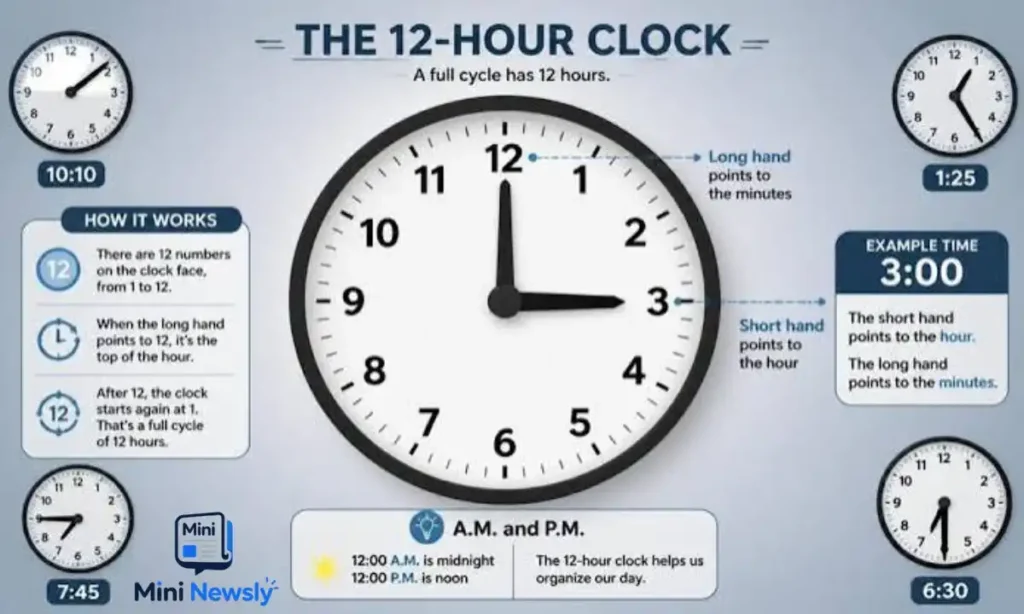

If you just typed “what time was it 5 hours ago” into Google, you probably want a fast answer. Here it is in the simplest way possible. Take the current time, subtract 5 hours, and that is your answer. For example, if it is 3:00 PM right now, then 5 hours ago it was 10:00 AM.
That is really all the math involved. But knowing what time was it 5 hours ago is only half the story. People ask this question for all kinds of reasons, from checking a work shift to figuring out what time a message was sent overseas. This guide walks through the full picture in plain, simple English.
By the end, you will know how to answer what time was it 5 hours ago instantly, without a calculator, and understand why our brains sometimes trip over something that should be so easy.
Understanding What “5 Hours Ago” Actually Means in Daily Life
When someone asks what time was it 5 hours ago, they are really asking about past time. It is a simple form of time subtraction. You take your current clock reading and move it backward by exactly 300 minutes.
This comes up more than people expect. Maybe you are checking when a delivery driver left the warehouse. Maybe you are trying to remember when you took your last dose of medicine. Either way, the question what time was it 5 hours ago is about connecting a past moment to right now.
Five hours is not a random number either. It is long enough to cross from morning into afternoon, or from evening into the middle of the night. That is exactly why this kind of time calculation trips people up more than you would think.
What Time Was It 5 Hours Ago Philippines
If you are asking what time was it 5 hours ago in the Philippines, the method stays the same, but you need the local time zone first. The Philippines runs on Philippine Standard Time, which is UTC plus 8.
So if it is currently 9:00 PM in Manila, then what time was it 5 hours ago in the Philippines would be 4:00 PM the same day. Simple subtraction, just applied to a specific time zone.
This matters a lot for people juggling calls or messages between the Philippines and other countries. A quick check of world clock tools removes the guesswork completely, especially when family or coworkers are spread across different regions.
Why Time Arithmetic Feels Weirdly Emotional Sometimes

Here is something nobody talks about. Time math feels harder than it actually is. You are not doing anything complex, yet your brain still hesitates.
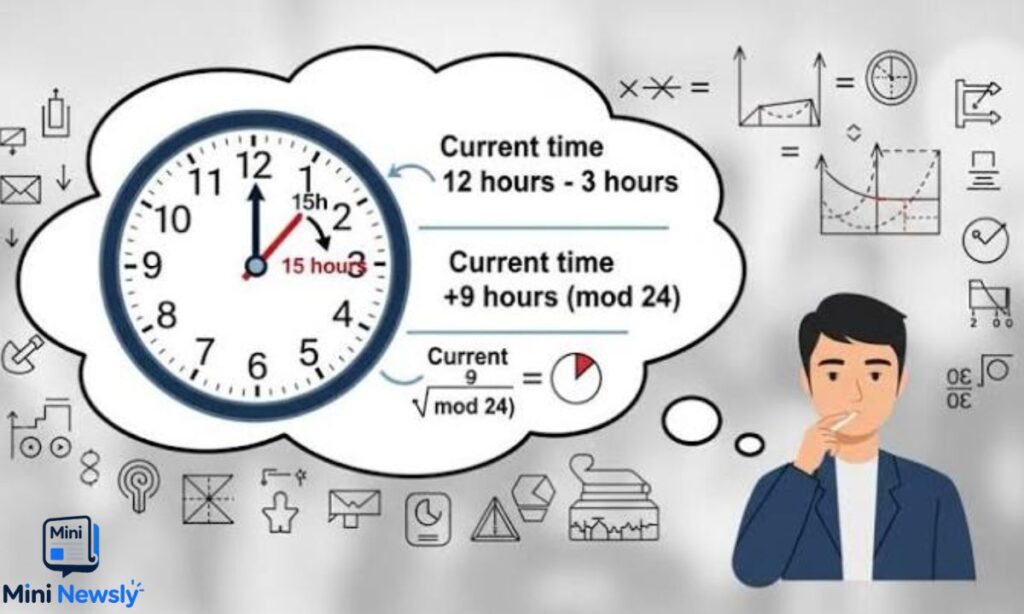
Part of the reason is that clock arithmetic does not follow normal number rules. We are used to base ten math, but clocks work in cycles of 12 or 24. That switch confuses the brain more than people admit.
There is also a small emotional layer to it. Thinking about what time was it 5 hours ago often means thinking about a specific moment, like when you left home or when an argument started. The math is easy. The memory attached to it is not always so simple.
What Was 5 Hours From Now
This is basically the reverse question, and people ask it just as often. Instead of subtracting, you are adding 5 hours to the current time.
Say it is currently 1:00 PM. Then 5 hours from now would land at 6:00 PM. If you are past noon and adding hours pushes you beyond midnight, just remember the day rolls over, and you continue counting from 12:00 AM again.
Knowing both directions, backward and forward, makes you much faster at everyday scheduling. It also makes answering what time was it 5 hours ago feel more natural, since your brain gets used to moving in either direction along the timeline.
How to Calculate What Time Was It 5 Hours Ago (Without Panicking)
Let us slow this down into a clear, repeatable method. This is the exact time calculation process to answer what time was it 5 hours ago every single time.
Step by step:
- Look at the current clock time.
- Subtract 5 from the hour number.
- If the number drops below zero on a 12 hour clock, add 12 and switch AM or PM.
- On a 24 hour clock, if the number goes negative, add 24 instead.
- Double check if you crossed into the previous day.
Here is a quick example. If it is currently 2:00 AM, subtracting 5 hours takes you to 9:00 PM the night before. That is a midnight crossing, one of the trickiest parts of any reverse time calculation.
Once you practice this a few times, working out what time was it 5 hours ago becomes almost automatic, the same way you do not think hard about basic addition anymore.
What Time Was It 5 Hours Ago EST
Eastern Standard Time is one of the most searched time zones in the world, mostly because so many major cities and businesses run on it. If you are asking what time was it 5 hours ago EST, the process is identical to any other zone.
For example, if it is currently 6:00 PM EST, then 5 hours earlier would be 1:00 PM EST. Nothing changes about the math itself, only the starting exact time you are working from.
People searching what time was it 5 hours ago EST are often coordinating with someone on the east coast of the United States, or checking financial markets that run on that schedule. A time zone calculator makes this instant if you do not want to do it by hand.
Time Zone Twists: GMT+5 and Its Quiet Confusions
GMT+5 covers a wide stretch of the world, including parts of South Asia. It sits 5 hours ahead of Greenwich Mean Time, which is where the whole concept of UTC offset comes from.
Here is where it gets interesting. If someone in GMT+5 is asking what time was it 5 hours ago, they might land right back near GMT itself, since the offset and the subtraction cancel out. That coincidence confuses a surprising number of people.
Always double check whether you are working with your local time zone or converting to someone else’s. Mixing the two up is one of the most common mistakes in any time zone calculator search, and it quietly ruins meeting schedules more often than people admit.
How Long Is 5 Hours in Days?
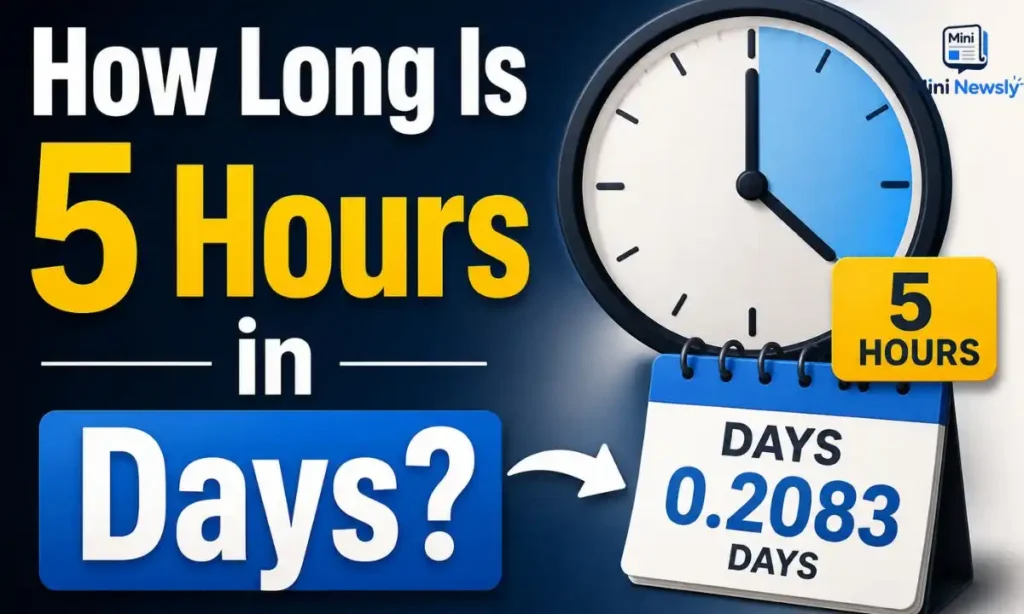
Short answer, 5 hours is about 0.2083 of a full day. A day has 24 hours, so 5 divided by 24 gives you that fraction.
In more relatable terms, 5 hours is roughly one fifth of your day. If you sleep for 8 hours, work for 8 hours, and handle other tasks for the remaining 8, then 5 hours is just over half of any one of those blocks.
Breaking it down further helps too. Five hours equals 300 minutes, or 18,000 seconds, or even 18,000,000 milliseconds if you want to get technical. None of that changes daily life much, but it shows just how much time actually sits inside a single 5 hour window.
Digital Tools That Quietly Save Us From Mental Math Chaos
Not everyone wants to do hour subtraction in their head, and that is completely fine. A good hours calculator or time finder tool handles the whole process instantly.
Most online time calculator tools let you plug in a current time and a number of hours, then spit out the answer in both AM and PM and 24 hour format. Some even factor in your exact date and time, which matters if the subtraction rolls back into yesterday.
These tools are especially handy for scheduling, travel time calculation, or figuring out work shift changes across time zones. When precision actually matters, like coordinating flights or shift work, leaning on a digital clock tool beats guessing every time.
Also read this: What Time Was It 3 Hours Ago? Easy Time Calculator (2026)
5 Hours Ago From Now

This phrase is basically another way people search for the exact same thing, what time was it 5 hours ago. The wording changes, but the intent stays identical.
Picture it this way. Whatever your current clock shows right now, move the hour hand back five full spaces. That new position is your answer.
If it is currently 11:30 AM, then 5 hours ago from now would be 6:30 AM. Same math, same logic, just phrased slightly differently depending on how someone types the search.
Real Life Scenarios Where “5 Hours Ago” Matters More Than You Think

This question shows up constantly in ordinary situations, not just trivia. Understanding elapsed hours actually solves real problems.
Common real world examples:
- Checking when you took medication timing doses to avoid doubling up.
- Working out an event timeline after something happened, like when a package left the warehouse.
- Comparing message timestamps across different time zones with friends or coworkers.
- Reviewing a calendar date to confirm when a meeting invite was actually sent.
Each of these depends on the same simple skill, subtracting 5 hours accurately. Whether it is medical, professional, or personal, knowing what time was it 5 hours ago turns confusion into clarity almost instantly.
Small Human Errors in Time Calculation (And Why They Happen)
Even simple math goes wrong sometimes, and time is no exception. Most mistakes come from mixing up AM and PM after crossing midnight.
Another frequent slip up happens with the 12 hour clock. People forget that going backward past 12:00 flips AM to PM or the other way around. It sounds small, but it throws off the whole answer.
A third common mistake is forgetting the previous day entirely. If it is 3:00 AM and you subtract 5 hours, you land at 10:00 PM the night before, not still today. Missing that detail is probably the single biggest reason people get what time was it 5 hours ago wrong.
Human Perception vs Digital Precision
Our brains are decent at estimating time, but not perfect. Digital clocks do not guess, they calculate. That difference matters more than people realize.
Ask someone what time was it 5 hours ago without a clock nearby, and most will be close, but rarely exact. Maybe they are off by 10 or 15 minutes because they are working from memory instead of a precise exact time reading.
This is not a flaw, it is just how human perception works. We round numbers, we estimate, and we trust our gut. A digital clock or world clock app removes that gap entirely, which is exactly why so many people reach for a tool instead of doing it purely by memory.
A Tiny Story About Losing Track of Hours
A friend of mine once landed after a long flight and had no idea what time it actually was back home. He kept asking himself what time was it 5 hours ago, trying to figure out if he had missed a call from his family.
He pulled out his phone, checked the time zone difference, and worked backward step by step. Turned out it was only mid afternoon back home, not late night like he assumed. A little bit of jet lag had completely scrambled his sense of time.
It is a small story, but it happens to almost everyone eventually. Time feels obvious until you are tired, traveling, or distracted, and suddenly a simple question like what time was it 5 hours ago feels surprisingly hard to answer.
Practical Tips for Quick Mental Time Calculation
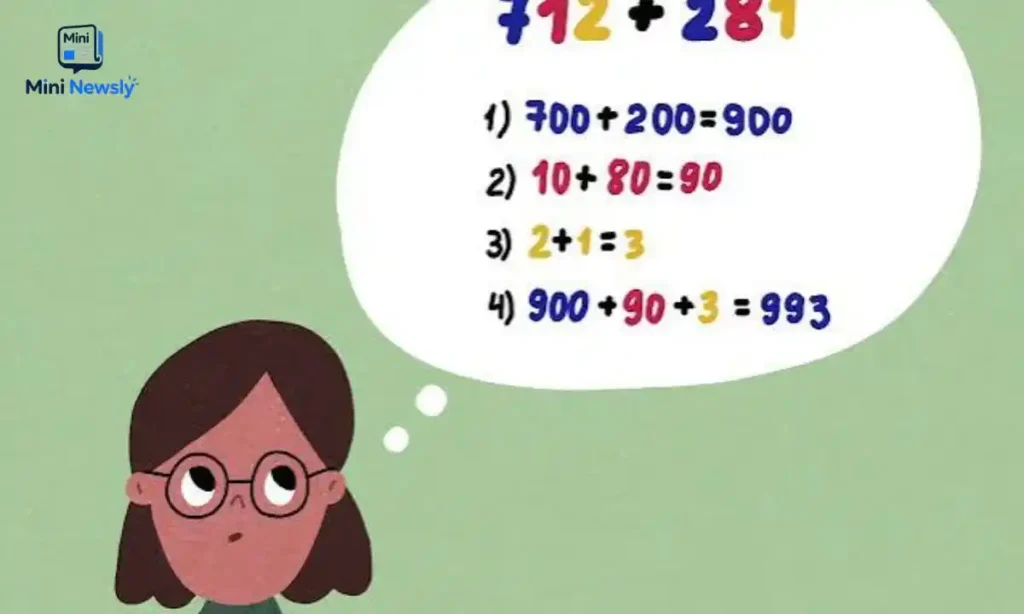
You do not need a calculator for most of this. A few small habits make mental time calculation much faster.
Helpful tips to remember:
- Round to the nearest easy number first, then adjust by a few minutes.
- Always check if you are crossing midnight before finalizing your answer.
- Practice converting between 12 hour clock and 24 hour clock formats until it feels natural.
- Use your fingers to count backward if you are ever unsure, it genuinely helps.
- Keep a mental note of your UTC offset if you travel often.
With a little practice, working out what time was it 5 hours ago becomes second nature, the same way telling time itself eventually became automatic for all of us.
Frequently Asked Questions About Time Calculation
How do I quickly check what time was it 5 hours ago without a tool? Subtract 5 from your current hour, then adjust AM or PM if needed. Watch closely for a midnight crossing.
Does the answer change across different time zones? Yes. The math stays the same, but your starting local time zone always shifts the final result.
Why does this question come up so often in daily life? Because tracking elapsed time matters for scheduling, medication, travel, and everyday communication across different time zones.
Conclusion
At its heart, working out what time was it 5 hours ago is nothing more than simple subtraction. The tricky part is remembering to watch for midnight, AM and PM switches, and whichever time zone you are actually working from.
Whether you are checking Philippine time, EST, GMT+5, or your own local time zone, the process never really changes. Subtract 5 hours, watch for the day rolling over, and you have your answer.
Next time someone asks you what time was it 5 hours ago, you will not need to pause and think twice. You will already know exactly how to work it out, quickly and correctly, every single time.

Welcome to mininewsly.com, your trusted source for grammar tips and text meanings. I have over 4 years of experience in the grammar and text meaning niche. My goal is to provide clear, accurate, and easy-to-understand content for every reader. Thank you for visiting, and I hope my articles help you learn with confidence.