
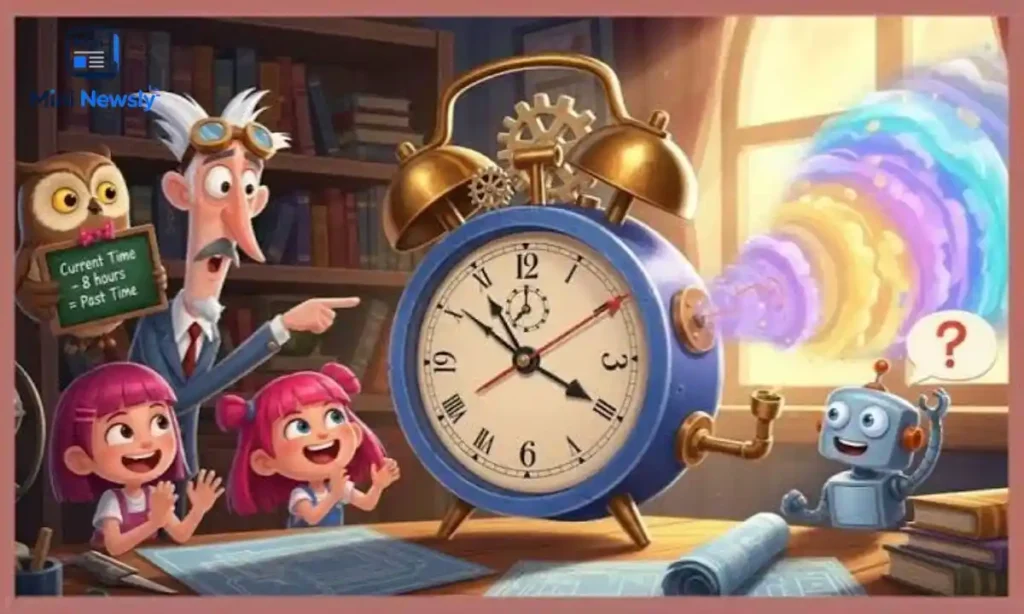
You glance at the clock, then wonder what it showed eight hours back. Maybe you’re checking when a text comes in. Maybe you’re tracking a work shift. Maybe your brain just decided to ask a random question at 11 p.m.
Here’s the fast answer. To find what time it was 8 hours ago, take your current time and subtract 8 hours. If you land before midnight, the date stays the same. If you cross midnight, the date rolls back one day.
That’s it. That’s the whole trick. But there’s more worth knowing, so let’s walk through it properly.
The Quiet Mathematics Behind “What Time Was It 8 Hours Ago”
The math behind what time it was 8 hours ago is simple time subtraction. You take the current time and pull back 8 hours, adjusting the clock as you go.
Say the current time is 8:18 a.m. Subtract 8 hours and you get 12:18 a.m. That’s a full midnight time calculation, since the result crosses from morning into the middle of the night.
Here’s a quick table showing how this plays out with different starting points, using GMT+5 as the reference zone.
| Current Time | 8 Hours Ago | Notes |
| 8:18 AM | 12:18 AM (same day) | Crosses into early morning |
| 10:00 AM | 2:00 AM | Same day |
| 6:00 PM | 10:00 AM | Same day |
| 12:00 AM | 4:00 PM (previous day) | Rolls back a full day |
Once you see the pattern, calculating 8 hours ago stops feeling like homework. It’s just clock arithmetic with a small twist for AM and PM.
Why We Even Ask “What Time Was It 8 Hours Ago” in the First Place
People don’t search 8 hours ago for fun. There’s usually a real reason behind it, something practical that needs an answer right away.
Common triggers include:
- Checking when a missed call or message actually came in
- Working out sleep schedule timing after a long shift
- Verifying when an online order or event happened
- Making sense of server logs or activity logs with timestamps
A night shift worker checking when their break started, a parent tracking a baby’s last feeding, a student figuring out when an assignment was submitted. These are the real moments behind the question. The phrase what time was it 8 hours ago shows up in daily life far more than people expect.
Breaking Down 8 Hours Like a Story, Not a Number
Eight hours sounds small until you actually count through it. Breaking it into pieces makes time subtraction much easier to follow.
In raw numbers, 8 hours equals:
- 480 minutes
- 28,800 seconds
- 28,800,000 milliseconds
Now picture those 8 hours moving backward from 8:18 a.m., one hour at a time. Hour one lands at 7:18 a.m. Hour four lands at 4:18 a.m. Hour eight, the full stretch, lands at 12:18 a.m.
Walking through it this way turns current time minus 8 hours from an abstract formula into something you can actually picture, almost like rewinding a video in your head.
The Role of AM and PM in Time Subtraction
AM and PM confusion is the number one reason people get what time was 8 hours ago wrong. Miss the switch and your whole answer is off.
Here’s the rule. If subtracting 8 hours takes you past 12:00 a.m. or 12:00 p.m., the label flips. For example, 3:00 a.m. minus 8 hours doesn’t just drop the number, it rolls into the previous evening at 7:00 p.m.
A quick AM PM calculator check:
- 8:18 AM minus 8 hours = 12:18 AM
- 3:00 PM minus 8 hours = 7:00 AM (same day)
- 4:00 AM minus 8 hours = 8:00 PM (previous day)
Once you spot the pattern, this part of clock arithmetic stops tripping people up.
When Time Becomes Emotional, Not Mathematical
Not every question about the past is really about numbers. Sometimes asking what time it was 8 hours ago is about placing a feeling, not finding a figure.
Think about a parent who just finished a rough night with a sick kid. Or someone recovering from jet lag, trying to line up their body clock with a new time zone. The hours matter less than the memory attached to them.
That’s fine too. A time calculation can be practical and personal at the same time. You don’t need a reason to care about where you were 8 hours ago.
Real Life Situations Where “What Time Was It 8 Hours Ago” Matters

This isn’t just a curiosity question. It shows up in real schedules, real jobs, and real routines more than people realize.
Some common examples:
- Medication schedule tracking, since many prescriptions run on 8 hour dosing cycles
- Work shift and night shift handoffs, where staff need to know exactly when a shift began
- Sleep schedule checks, especially for shift workers or new parents
- Travel planning, when adjusting for a different time zone after landing
- Productivity tracking, when reviewing how long a task actually took
In every one of these, knowing what time it was 8 hours ago turns a fuzzy memory into a clear answer you can actually use.
Also, read this Blog: How Long Until 4:00 PM? Find the Exact Time Left Instantly (2026)
How the Calculation Actually Works (Simple Version)
Strip away the extra explanation and the process behind what time it was 8 hours ago comes down to five steps.
- Start with the current time on the clock
- Subtract 8 hours from that number
- Check if the result crosses midnight or noon
- Flip the AM or PM label if needed
- Adjust the date if the calculation rolled into the previous day
Using our earlier example: 8:18 a.m. minus 8 hours equals 12:18 a.m. No calendar flip needed here since it stayed inside the same day, just barely.
If you’d rather skip the mental math, a time subtraction tool or date and time calculator does all five steps in about one second.
Common Mistakes People Make
Even simple math goes sideways sometimes. Here are the slip ups that trip people up most often when working out what time it was 8 hours ago.
- Forgetting the previous day calculation when the result crosses midnight
- Mixing up AM and PM after the subtraction
- Confusing 8 hours with 8 minutes when typing into a calculator
- Ignoring time offset when comparing two different time zones
- Rounding the time instead of calculating it exactly
None of these mean you’re bad at math. They just mean clocks are sneaky. A clock time calculator exists specifically to catch these small errors before they cause a bigger mix up.
Understanding Time in Different Layers
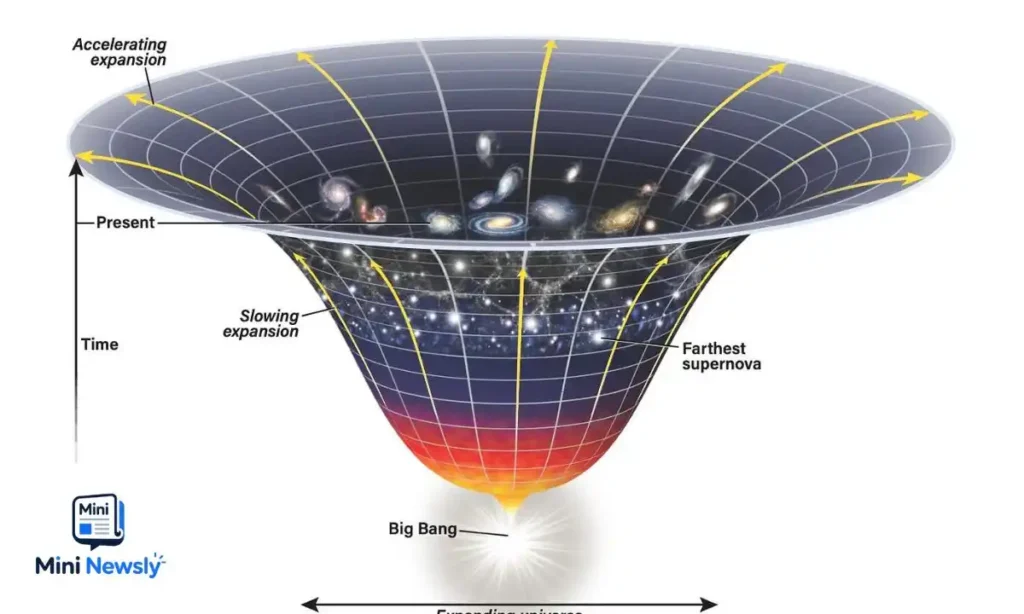
Time isn’t just one flat number on a screen. It has layers, and understanding them makes time calculation much easier overall.
- Current time: what the clock reads right now
- Past time: any moment that already happened
- Future time: anything still ahead
- Time duration: how long a stretch of time lasts
- Time offset: the gap between two specific moments
When someone works out what time it was 8 hours ago, they’re really moving through the past time layer, using duration as their measuring stick. Seeing it broken down this way makes the whole idea click faster.
Does Time Zone Change the Answer?
Yes, and this is a step a lot of guides skip. If you’re comparing what time was it 8 hours ago across two different regions, you need to account for the time offset between them, not just subtract 8 hours once.
For example, if you’re in GMT+5 and checking a timestamp from a friend in GMT+0, you’d first convert their time into your zone, then subtract the 8 hours. Skipping this step is one of the most common reasons online time difference calculator results confuse people.
Daylight saving changes can shift this too, though GMT+5 itself does not observe daylight saving. Always double check if either time zone you’re comparing does, since a one hour shift can throw off your whole calculation.
A Small Practical Guide for Quick Mental Math
You don’t always need an app open to figure out 8 hours ago. A little mental math trick makes it fast.
Think in blocks of 12. If your current time is in the morning, subtracting 8 hours usually keeps you in AM territory unless you started before 8 a.m. If it’s the afternoon or evening, you’ll often land back in the morning.
Quick examples to practice with:
- 4:00 AM minus 8 hours = 8:00 PM the day before
- 1:00 PM minus 8 hours = 5:00 AM
- 11:30 PM minus 8 hours = 3:30 PM the same day
Try it with your own current time right now. It gets faster the more you practice, kind of like a small brain workout.
Tools That Help You Do It Faster
If mental math isn’t your thing, that’s completely normal. A good online time calculator takes the guesswork out entirely.
Look for a tool that offers:
- A built in time difference calculator for comparing two moments
- An hours ago calculator for quick backward math
- Support for multiple time zone conversions
- A clean, simple current time calculator interface with no clutter
These tools are especially handy when you’re working with odd numbers like 9, 11, or 13 hours instead of a clean 8. Nobody wants to do that math by hand at 2 in the morning.
A Tiny Structured Snapshot of the Calculation
Here’s a clean summary of the core example we’ve used throughout this guide, useful if you just want the numbers at a glance.
- Current time: 8:18 AM, GMT+5
- Hours subtracted: 8
- Result: 12:18 AM
- Date change: none, same calendar day
- Equivalent duration: 480 minutes, 28,800 seconds
Save this pattern in your head and you can apply it to almost any exact time 8 hours ago question that comes up.
Why This Question Keeps Coming Back
People ask what time it was 8 hours ago again and again because clocks don’t pause for us to catch up. Life moves, and we’re constantly trying to place ourselves within it.
It’s less about the exact minute and more about orientation. Where were we? What happened before this? How far have we come since then? A simple time question often carries a bigger one underneath it.
That’s really why this kind of time tracking question never goes out of style. It’s small, but it’s genuinely useful, over and over again.
Conclusion
So, to bring it all together: what time it was 8 hours ago comes down to one simple move, subtract 8 hours from your current time and adjust the date if you cross midnight. Using our example, 8:18 a.m. rolls back to 12:18 a.m. on the same day.
Whether you’re checking a work shift, a medication schedule, or just satisfying a random 2 a.m. curiosity, this kind of time calculation is worth knowing by heart. Bookmark this guide, try the math with your own current time, and next time someone asks what time it was 8 hours ago, you’ll already have the answer.
Got a real life example of when this calculation actually helped you? Drop it in the comments, it’s always interesting to see how differently people use the same eight hours.

Welcome to mininewsly.com, your trusted source for grammar tips and text meanings. I have over 4 years of experience in the grammar and text meaning niche. My goal is to provide clear, accurate, and easy-to-understand content for every reader. Thank you for visiting, and I hope my articles help you learn with confidence.