If you have ever stared at a product listing that says “20 cm” and had zero idea what that actually looks like, you are not alone. Numbers on a screen do not mean much until you connect them to something you can picture in your hands.
That is exactly what this guide does. We will answer how long is 20 cm in every unit you might need, then walk through real objects sitting around your house right now that match this exact 20 cm length. By the end, you will have a mental ruler you can use anywhere, with no tape measure required.
So how long is 20 cm, in the simplest terms? It equals 7.87 inches, 200 millimeters, 0.2 meters, and about 0.656 feet. Keep that number in your head as we go, because we are about to make it click.
How long is 20 cm in inches on a ruler
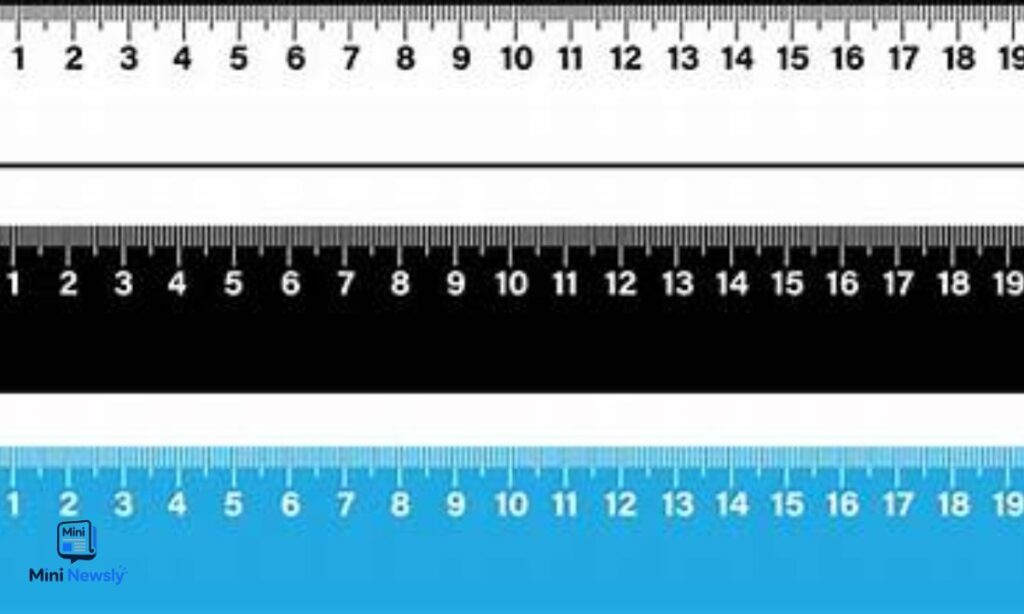
How long is 20 cm in inches? It comes out to 7.87 inches, which is just a hair under 8 inches. If you own a ruler marked in inches, picture the line almost at the 8 inch mark but not quite touching it.
This small gap trips a lot of people up. Some assume 20 cm and 8 inches are the same thing, but they are not identical, they are just close enough for casual use. If you are measuring something where precision actually matters, like a part that needs to fit into a slot, that tiny difference of 0.13 inches can be the reason something does not sit right.
On a standard 30 cm ruler, 20 cm sits two thirds of the way along, right before the final third stretch to the end. That visual alone helps a lot of people finally answer how long is 20 cm without doing any math at all.
20 CM By Every Unit You Could Ever Need
Before we get into real objects, here is every 20 cm conversion in one place so you never have to look it up twice.
| Unit | Value |
| Centimeters | 20 cm |
| Inches | 7.87 in |
| Feet | 0.656 ft |
| Millimeters | 200 mm |
| Meters | 0.2 m |
| Yards | 0.219 yd |
| 72 DPI pixels | 567 px |
| 96 DPI pixels | 756 px |
| 300 DPI pixels | 2,362 px |
The pixel rows matter more than people expect. If you design anything for print or web, knowing that 20 cm in mm equals 200 mm, and that this converts to roughly 2,362 pixels at print quality, saves you a scaling headache later.
For everyday purposes though, most people only ever need three of these rows: 20 cm in inches, 20 cm in feet, and 20 cm in meters. Bookmark this table and you are set for both.
Twelve Things Near You Right Now That Prove the Point
Numbers on a chart are one thing. Actually seeing how big is 20 cm in real life is what makes it stick. Here are objects you likely have within arm’s reach right now, each one measured honestly rather than stretched to fit.
1. A Folded Newspaper (Half Page Width)

Fold a broadsheet newspaper once down the middle and that folded width lands close to this exact measurement. It is one of the easiest 20 cm examples because almost everyone has handled a newspaper at some point.
Newspaper sizes were shaped by old mechanical printing presses from the 1800s, and the fold gave readers a size they could hold with one hand on a train. That habit stuck around long after the presses changed.
Next time you grab a paper, notice the fold. You are holding a real 20 cm size comparison without even trying.
2. A Standard Unsharpened HB Pencil
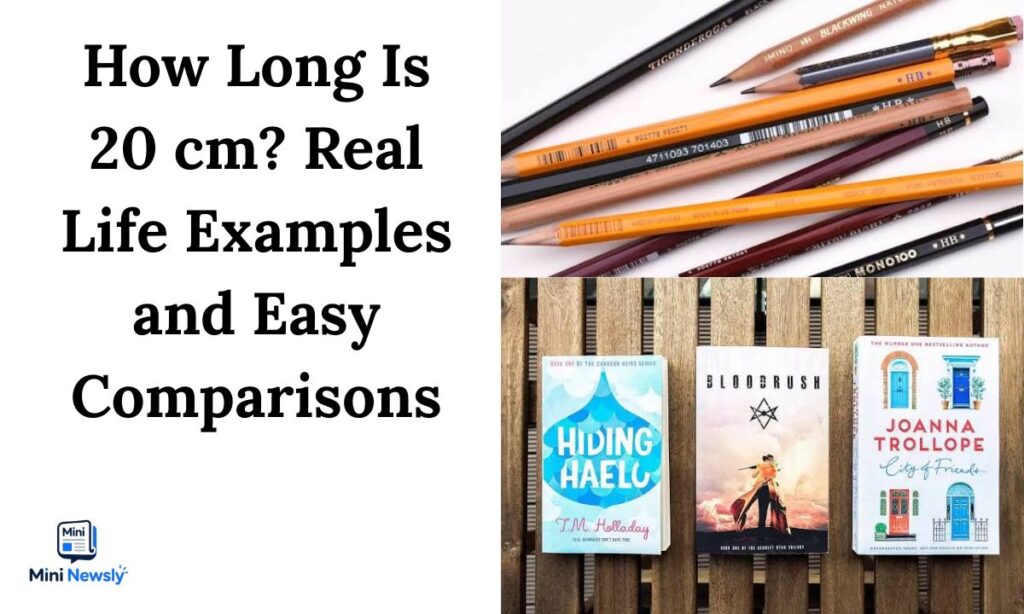
A fresh, unsharpened HB pencil measures almost exactly 20 cm, or 7.87 inches, not counting the eraser cap. This is one of the most reliable objects that are 20 cm long because pencil length has barely changed in decades.
Manufacturers settled on this size because it balances well between your fingers without feeling too short or too long to control. It is also built to survive a full school term of sharpening.
Start the year at 20 cm, and by the time exams roll around, you are holding a stub closer to half that length.
3. A Men’s Dress Shoe (Size 8 UK / 42 EU)
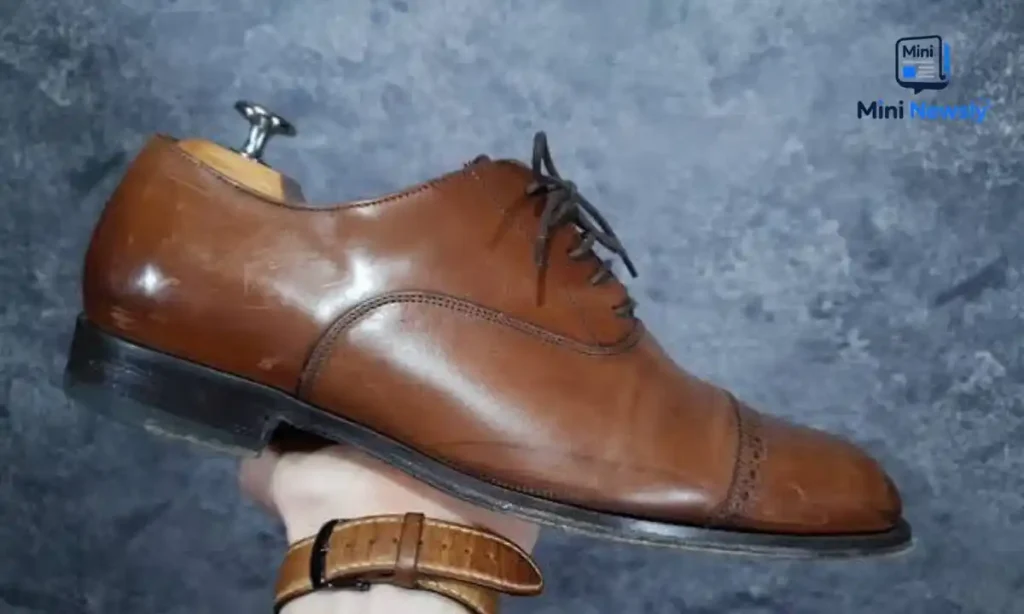
Here is where a lot of size guides get it wrong. A UK size 8 shoe actually has an insole closer to 27 cm, not 20 cm, so do not trust anyone who tells you otherwise. What does land close to 20 cm is the width of the shoe box that pair usually comes in.
Shoe sizing works on a scale where each UK size adds roughly 8.5 mm of length, which means a 20 cm measurement actually lines up with a child’s shoe around UK size 13, not an adult size 8. If you want an honest shoe length measurement reference, grab a kid’s shoe rather than your own dress shoes.
4. A Paperback Novel (Width)
Most paperback books use a printing standard called B format, and the width of these books sits close to 20 cm across the UK, Europe, and Australia. This makes paperback book size one of the easiest household comparisons available.
Publishers picked this width because it fits comfortably on a shelf while still being easy to hold open with one hand. The pages do not flop around and the spine does not fight you.
Pull almost any novel off your shelf published after 1990 and check the width. You are holding a genuine 20 cm reference.
5. A Wooden Cooking Spoon
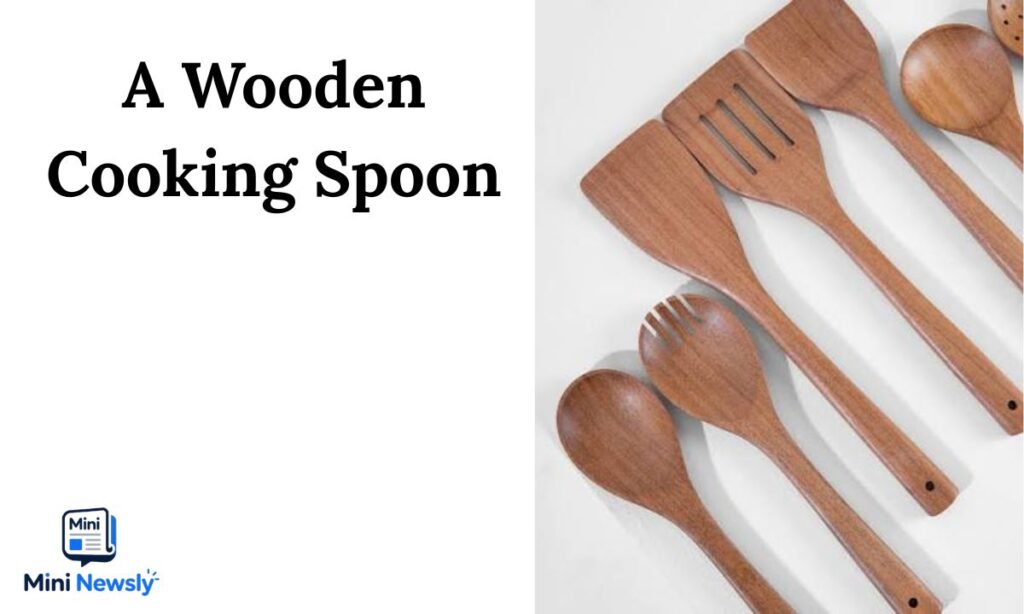
The handle section of a standard wooden cooking spoon runs close to 20 cm on its own, while the full spoon including the bowl often reaches around 30 cm total. This gives you a 20 cm ruler comparison sitting in your kitchen drawer right now.
That handle length exists so the bowl of the spoon clears the rim of a pot while you stir, keeping your knuckles safe from the heat. Wood also does not conduct heat the way metal does, so that extra length actually matters. Next time you cook pasta, glance at the handle in your hand. That is your cooking spoon handle doing double duty as a measuring tool.
6. A Tablet Screen Diagonal (Small Compact Tablets)
Many compact 8 inch tablets have a screen diagonal that lands close to 20.3 cm, corner to corner. This is one of the more useful tablet screen size comparisons if you shop online often.
Screen size is always measured diagonally, never across the width, which confuses a lot of first time buyers. An 8 inch screen became popular precisely because it hits this sweet spot between portable and readable.
If you have ever handed a tablet to a kid on a road trip to keep them quiet, you have held this exact 20 cm dimensions reference without realizing it.
7. A Standard Envelope (DL Size)
A DL envelope, the slim type used for formal letters, measures 22 cm by 11 cm. The longer side sits just slightly above 20 cm, making this one of the more precise everyday objects 20 cm comparisons around.
DL stands for Dimension Lengthwise, a European standard built so a folded A4 sheet slides in cleanly. Banks and offices lean on this format constantly because it fits standard postboxes without a squeeze.
Hold one lengthways next time mail arrives, and you are gripping almost exactly this length.
8. A Newborn Baby’s Foot
Let’s be accurate here instead of stretching a cute idea. A newborn’s foot actually measures around 7.6 to 8.3 cm, nowhere close to 20 cm, so this is a case where the size difference is worth knowing rather than guessing.
What does come close to this measurement is a folded receiving blanket, or the width of a standard baby changing mat once folded for storage. Parents packing a diaper bag run into this exact length estimation problem constantly.
It is a good reminder that not every comparison holds up, and getting it right matters more than forcing a cute story.
9. A Craft Beer Can (Tall 500ml Format)
Tall 500 ml craft beer cans, the kind used by independent breweries, typically stand between 16.8 and 17 cm tall, which is shorter than 20 cm despite what some size guides claim. Two cans stacked with a gap between them gets you closer to the mark instead.
Standard 330 ml cans run even shorter, which is part of why the taller can became popular for craft labels needing more space for artwork. It is a good example of why checking actual manufacturer specs matters before trusting a size chart.
If you want a beer related reference for 20 centimeters in real life, think two shorter cans stacked loosely rather than one tall one.
10. A Personal Pizza (20 cm Pizza Size)
A 20 cm pizza is what most restaurants classify as a personal or individual size, measured crust to crust across the middle. This is one of the most searched 20 cm examples online, and for good reason since food size questions come up constantly.
This size feeds one person comfortably without turning into a sharing situation. Pizza ovens cook a pie this size in under two minutes at high heat, which is why quick service spots love it.
Eight inches across, 20 cm total. That is your personal pizza question solved for good.
11. A Hardback Children’s Book
Large format hardback picture books typically measure close to 20 cm wide, sometimes a touch more depending on the publisher. The width exists to let full page illustrations breathe without feeling cramped.
Publishers design these proportions so a parent can hold the book open at arm’s length while a child sitting nearby can still see both pages clearly. It is built specifically for reading aloud together.
Grab any classic picture book off a shelf and check the width. You will land close to this 20 cm visual guide almost every time.
12. A Standard Pencil Case
A typical school pencil case measures close to 20 cm in length, just enough to fit a full row of standard pencil length items plus a ruler laid flat inside. This is a comparison most people overlook simply because it sits in a bag rather than out in the open.
Manufacturers size these cases around the pencil itself, since the whole point is fitting a fresh, unsharpened pencil without wasted space. That is not a coincidence, it is smart, practical design.
Next time you zip open a pencil case, you are holding another everyday 20 cm size comparison without ever picking up a tape measure.
13. A Standard House Brick (Length)
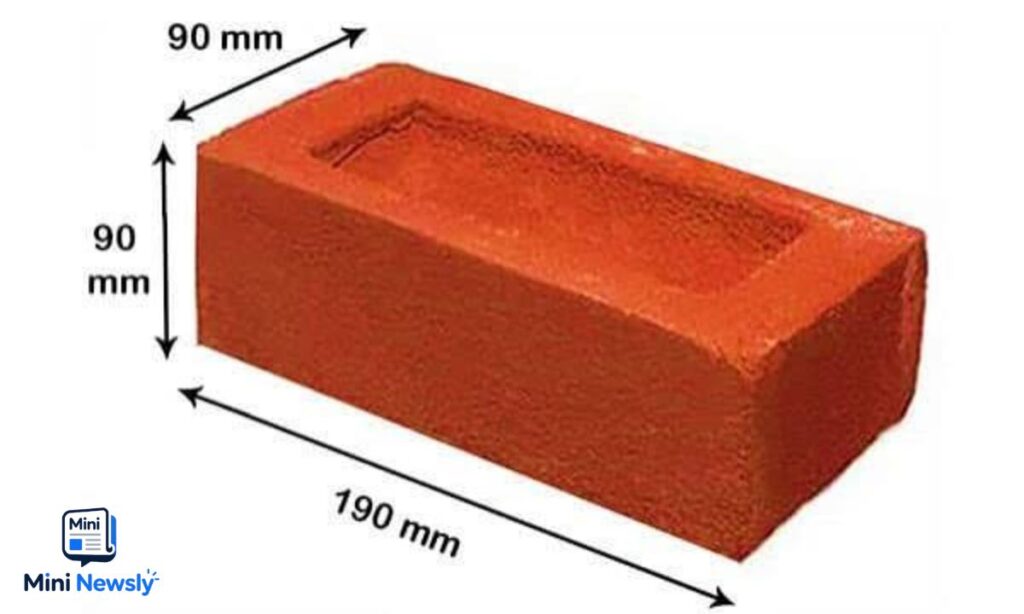
A standard UK house brick measures 215 mm long, which lands close to but not exactly at 200 mm. It is near enough to use as a mental reference, though worth knowing it is not a perfect match.
Brick dimensions were standardized in the UK in 1965 so builders could calculate wall measurements without guesswork. Two bricks laid end to end plus a mortar joint were designed to match one brick laid lengthwise, keeping construction math clean.
Walk past any brick wall and you are looking at this size repeated hundreds of times, stacked all the way up.
How big is 20 cm compared to fruit
If kitchen items make more sense to you than office supplies, fruit is a solid shortcut. A large banana typically measures between 18 and 20 cm, making it one of the most relatable 20 cm size comparison examples out there.
A whole pineapple, measured from base to the start of the leafy crown, often lands close to this length too, though sizes vary more with fruit than manufactured objects. Three medium sized oranges lined up in a row will also get you fairly close.
This comparison works so well because almost everyone has a banana or orange nearby at some point during the week. It turns an abstract number into something you can grab from a fruit bowl.
Left Your Ruler Somewhere? Try These Instead
No tape measure nearby? You can still estimate how to measure 20 cm without a ruler using items already in your pocket or bag.
A standard UK banknote measures 142 mm long, so one and a half notes laid end to end gets you close to 20 cm. Your index finger from knuckle to tip usually measures around 7 to 8 cm for most adults, meaning about two and a half finger lengths gets you there too.
An A4 sheet of paper has a short side measuring 210 mm, only 10 mm off from 20 cm exactly. That tiny gap makes A4 paper one of the most convenient measuring without a ruler tricks available almost anywhere.
The 20 cm Pizza Angle Most People Miss
Since the personal pizza question comes up so often, it is worth breaking down the actual math behind it. A 20 cm diameter pizza has a radius of 10 cm, and using the formula for pizza area calculation, pi times radius squared, you get 314 square centimeters of pizza.
Compare that to a 30 cm pizza, a common medium size at most chains, which works out to 706 square centimeters. That is more than double the pizza from just 10 extra centimeters across, because area grows by the square while diameter only grows in a straight line.
This is the real reason a medium pizza always feels far bigger than a personal one, even though the size difference on paper looks small. Understanding diameter and radius this way makes ordering food weirdly satisfying.
Conclusion
At this point, how long is 20 cm should feel less like an abstract number and more like something you can picture instantly. Whether it is a pencil, a paperback book, or a personal pizza, you now have real, physical references to lean on.
The next time a product listing throws a measurement at you with no context, you will not need to reach for a calculator. You will just picture the pencil, the pizza, or the paperback, and know exactly what you are dealing with.
If you found this guide useful, save it for the next time a size question stumps you, and feel free to share it with anyone else who could use a real world ruler in their head.

Welcome to mininewsly.com, your trusted source for grammar tips and text meanings. I have over 4 years of experience in the grammar and text meaning niche. My goal is to provide clear, accurate, and easy-to-understand content for every reader. Thank you for visiting, and I hope my articles help you learn with confidence.