

How far is 500 feet? It is about 1.5 NFL football fields laid end to end, or roughly a one to two minute walk at normal pace. Most people hear “500 feet” and just nod along without actually picturing it. That changes today with 20 real things you already know.
How Big Is 500 Feet?
How big is 500 feet sits right between “bigger than your backyard” and “smaller than a full bridge span.” It is longer than most city block lengths in America and shorter than two football fields combined. Think of it as the sweet spot of mid-range distances you bump into every single day.
You see 500 feet in fireworks laws, drone rules, and road planning without realizing it. A construction worker uses it to mark survey boundaries before breakfast. Once you get the feel for it, you start spotting 500-foot distance examples everywhere.
How Long Is 500 Feet?
How long is 500 feet in numbers you actually use? Here is a quick 500 feet conversion chart so you never have to guess again.
| Unit | Value |
| 500 feet in meters | 152.4 meters |
| 500 feet in yards | 166.67 yards |
| 500 feet in miles | 0.0947 miles |
| 500 feet in kilometers | 0.1524 km |
| 500 feet in inches | 6,000 inches |
These numbers matter when you are doing distance conversion for school, travel, or a home project. 500 feet in meters is about one and a half basketball courts lined up lengthwise. Keep this table bookmarked because it saves real time.
What Does 500 Feet Look Like?
What does 500 feet look like when you are standing on a normal street? Look down a straight road and find a stop sign or parked car roughly two blocks away and that is your number. Your brain tends to shrink distances beyond 300 feet, so 500 feet visually always feels closer than it really is.
Imagine a long beach pier stretching into the ocean on a foggy morning. That stretch of wooden planks over water is one of the cleanest ways to visualize 500 feet without any tools. It is longer than you expect every single time.
Things That Are 500 Feet Long: 20 Real-World Comparisons
These real things that are 500 feet long give your brain something solid to hold onto. Each one is a 500 feet comparison you can call up any time someone throws that number at you. Pick two or three favorites and they will stick for life.
Seattle’s Space Needle

The Seattle Space Needle stands 605 feet tall, meaning how far is 500 feet is about 83 percent of the way up. Stop just before you reach the observation deck and that gap in the sky is your 500 feet. It is one of the most powerful skyscraper height comparisons you can use anywhere in America.
1.5 Football Fields
One regulation NFL football field including end zones measures 360 feet. Add half of another field and you land almost exactly on 500 feet. Every sports fan in America already owns this mental image, so use it freely.
5 Blue Whales Lined Up
A blue whale averages around 90 feet in length. Line up five of these ocean giants nose to tail and you hit roughly 500 feet on the dot. It is a wild picture but it works perfectly for understanding distance scale.
2.5 Ferris Wheels
A standard large amusement park Ferris wheel stands about 150 to 200 feet tall. Stack two and a half of them horizontally and you are right at how far is 500 feet. Next time you pass one at a fair, remember you are looking at one chunk of your measurement.
Large Cruise Ships

Many mid-size cruise ships measure right around 500 feet from bow to stern. Standing on a dock next to one gives you an instant full-body sense of the distance. This is one of the best 500-foot distance examples for anyone who has visited a major port city.
Oil Tankers
Mid-range oil tankers typically run between 500 and 700 feet long. The shorter ones in that class sit almost exactly at your target distance. Oil tanker size gives engineers and dock workers a daily reference point for 500 feet.
Also, read this blog: 15 Most Common Things That Weigh About 500 Grams
Large Docks

Commercial loading docks in major U.S. ports often stretch to or past 500 feet along the waterfront. Workers planning freight operations use this distance constantly for spacing and equipment placement. It is a quiet but very real everyday 500 feet comparison hiding in plain sight.
Seagoing Barge
A large connected seagoing barge configuration on American rivers can reach right around 500 feet. If you live near the Mississippi or Ohio River you have probably watched one pass without knowing the number. Barge length is one of the most underrated objects measuring 500 feet in daily life.
Piers
The Santa Monica Pier and dozens of East Coast fishing piers include sections measuring close to 500 feet. Standing at the base and looking toward the end gives you an honest gut-level feel for the distance. Pier length comparison is one of the simplest ways to estimate distance visually near the water.
Runway Sections
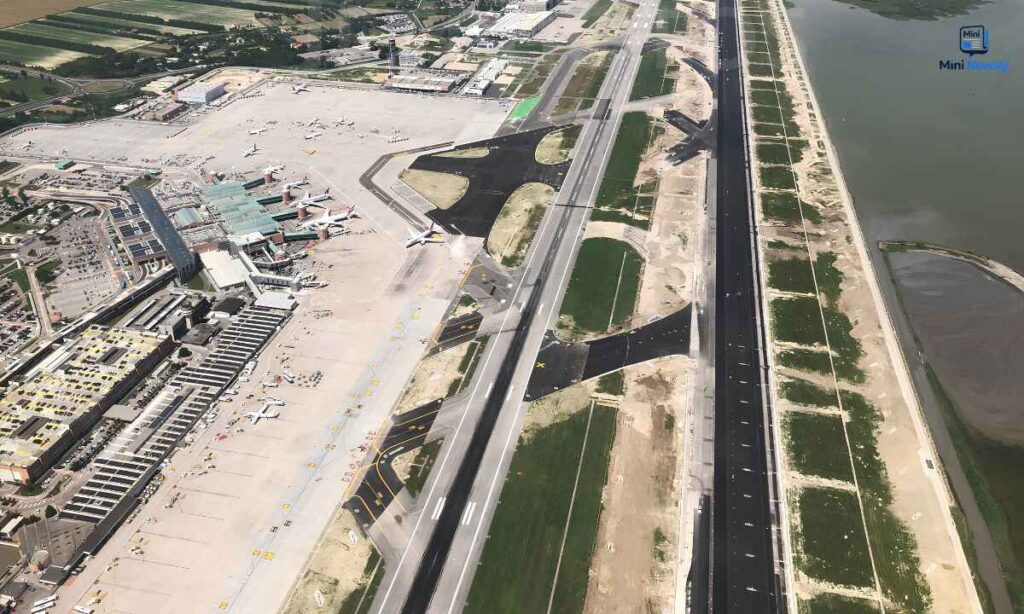
Runway length markings at airports use 500-foot intervals between threshold bars and safety zones. Pilots and aviation engineers rely on this 500-foot distance for approach calculations every single flight. Airport safety zones are literally built around this number by FAA regulation.
A Typical Suspension Bridge Span
The space between two towers on many American suspension bridges measures around 500 feet. Parts of the Brooklyn Bridge and similar structures use spans very close to this length. It turns every bridge you cross into a live 500 feet comparison you can see with your own eyes.
A City Block in Many U.S. Cities
In cities like Seattle, a standard city block length can run close to 500 feet depending on orientation. Chicago blocks run about 330 feet east-west but stretch much longer north-south, so direction matters. Urban distance examples like city blocks are the fastest way to judge distance accurately on foot.
A Large Wind Turbine Blade Trio End-to-End
A modern wind turbine blade measures roughly 150 to 200 feet long. Place three of them end to end and you are right at how far is 500 feet. Energy infrastructure gives engineers one of the most practical real-world measurement guides available.
A Medium-Size Container Ship

Many container ships at the smaller end of the scale measure right around 500 feet in length. Watching one move through a harbor gives you an almost perfect live look at 500 feet visually. Container ship size is something dock workers and logistics planners use as a mental anchor daily.
A Modern Skyscraper Laid on Its Side
A 40 to 50 story building stands roughly 500 feet tall in most American cities. Tip it sideways in your mind and you get a ground-level picture of how long is 500 feet horizontally. This skyscraper height comparison works especially well when you are standing near a tall downtown building.
An Aircraft Carrier Hangar Deck Section
The hangar deck of a Nimitz-class aircraft carrier runs about 684 feet total. A major section of that deck, roughly three-quarters of the full length, gives you your 500 feet. Aircraft carrier dimensions are a favorite reference point in military and naval engineering measurements.
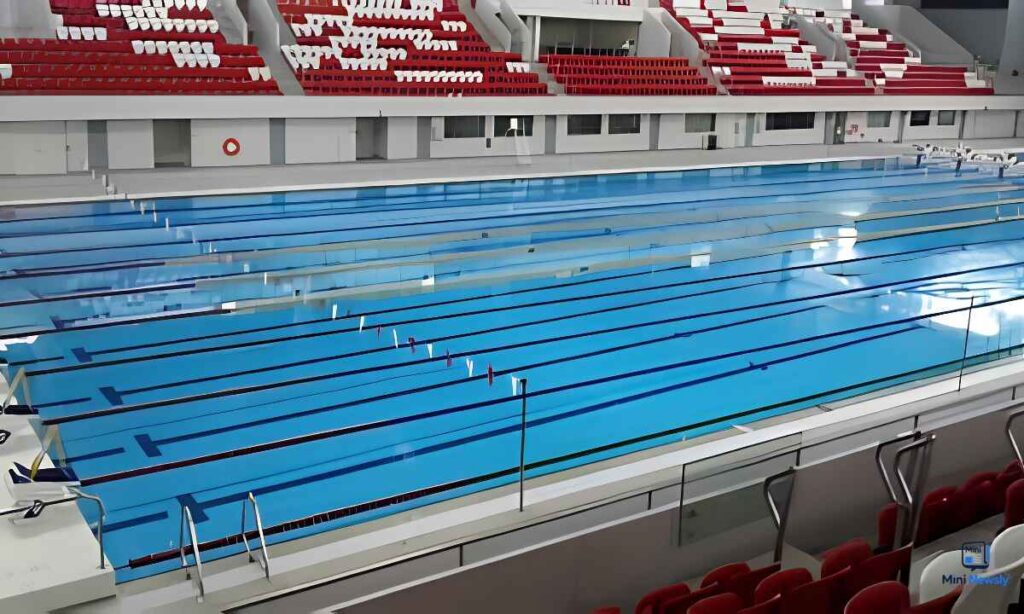
Three Olympic Swimming Pools End-to-End
A standard Olympic pool measures exactly 164 feet long. Line up three of them back to back and you land at 492 feet, just a breath short of 500 feet. Almost every major city has a facility you can picture, making this one of the most relatable size comparison guides around.
A Large Passenger Train with Multiple Cars
A standard Amtrak passenger car runs about 85 feet long. Six cars coupled together give you around 510 feet, landing right on how far is 500 feet. Next time a train rolls past at a crossing, count six cars and you have your distance locked in.
Converting 500 Feet to Other Units
Convert 500 feet once and you stop second-guessing yourself forever. 500 feet in meters is 152.4, which comes up constantly in international projects and science classes. 500 feet in yards at 166.67 is useful for anyone working on sports fields or landscaping jobs.
500 feet in miles is just under one-tenth of a mile, which means you cover it in seconds while driving. Length conversion like this matters in road planning, fiber-optic cable installation, and construction layouts. Knowing these numbers cold makes you faster and more confident on any project.
Everyday Uses of 500 Feet
Fireworks restrictions in most U.S. states require a minimum of 500 feet between launch sites and crowds. FAA drone regulations set 500 feet as the standard maximum altitude for recreational flights. These are not random numbers. They come from real safety research on hazard zones and safety separation distance.
Landscapers use 500 feet for irrigation system planning and tree spacing on large properties. Builders reference it constantly for perimeter surveys and construction surveying layout. Even your home Wi-Fi signal range, around 150 to 300 feet indoors, makes more sense when you understand where 500 feet sits on the scale.
500 Feet in Engineering and Science
Geotechnical engineering and road planning both rely on 500-foot baseline measurements for earthwork and grading. Environmental scientists use 500 feet as a standard buffer zone around wetlands and protected wildlife habitats. Infrastructure planning for roads, bridges, and utilities frequently uses this distance as a design checkpoint.
Robotic navigation systems and remote sensing devices are often tested and calibrated at exactly 500 feet. Cellular tower coverage maps use this interval to plan signal overlap between towers. It shows up in wireless communication range testing, drone navigation systems, and autonomous vehicle path planning too.
The Cultural and Historical Significance of 500 Feet
Early American city planners used 500-foot segments to lay out street grids and divide land parcels. Mining regulations and canal safety rules from the 1800s used this measurement for worker protection zones. How far is 500 feet was a practical survival question long before it became a trivia topic.
Historic mills, early railway buffer zones, and waterway clearance rules all referenced 500 feet in their original codes. Many of the downtown blocks Americans walk today were designed around exactly this distance. It is baked into the bones of how American cities were built.
500 Feet in Technology and Innovation
Autonomous vehicles use 500 feet as a key sensing and reaction distance in highway algorithms. Telecommunications planning teams test Wi-Fi coverage and long-range sensors at this distance when mapping signal zones. Robotics systems use 500 feet for navigation calibration in warehouses, ports, and outdoor testing fields.
Delivery drone programs from major companies currently test flight paths at 500-foot intervals for safety compliance. Signal coverage maps for 5G towers frequently reference 500 feet as a micro-zone planning unit. Technology is quietly obsessed with this distance in ways most people never notice.
Practical Ways to Visualize 500 Feet in Everyday Life
Stand at one end of a large parking lot and count roughly 200 steps at a normal pace. That walk lands you right at how far is 500 feet without any tools or apps needed. It takes under two minutes and works anywhere flat.
Find a straight road and spot a landmark roughly two standard city blocks away. That landmark is sitting at approximately 500 feet depending on your city’s block layout. Distance visualization techniques like this turn an abstract number into something your legs and eyes remember.
Real-World Objects and Landmarks That Measure About 500 Feet
The observation deck of the Seattle Space Needle sits at 520 feet, making it the closest famous landmark to exactly 500 feet in America. The full length of many mid-size cruise ships docked in U.S. ports also hits this mark almost exactly. These two alone give you a land-based and a water-based anchor for 500 feet visually.
Three Olympic swimming pools lined up end to end reach 492 feet, close enough to use as a daily reference. A row of six Amtrak passenger cars at a train crossing measures about 510 feet. These are the kinds of real-world dimensions that make how far is 500 feet click instantly.
Why Understanding 500 Feet Matters in Sports, Safety, and Engineering
Baseball field dimensions put most center field walls between 400 and 420 feet from home plate. Knowing how far is 500 feet tells you exactly why only elite power hitters clear those fences with room to spare. Sports field measurements become far more meaningful once you have this number locked in your head.
FAA drone regulations and airport safety zones are built around 500 feet as the standard operating boundary. Construction crews, police, and emergency services all use this distance daily for safety separation distance planning. Understanding it is not just interesting, it is genuinely useful in real life.
Conclusion
How far is 500 feet is now something you can actually picture, not just recite. It is 1.5 football fields, five blue whales, one mid-size cruise ship, or a two-minute walk from your front door. Pick your favorite comparison and it will stick with you forever.
You will start noticing 500 feet in fireworks warnings, drone flight limits, bridge spans, and airport signs everywhere you go. That is what understanding a distance actually feels like once it clicks. Drop a comment below and tell us which comparison made it real for you.

Welcome to mininewsly.com, your trusted source for grammar tips and text meanings. I have over 4 years of experience in the grammar and text meaning niche. My goal is to provide clear, accurate, and easy-to-understand content for every reader. Thank you for visiting, and I hope my articles help you learn with confidence.