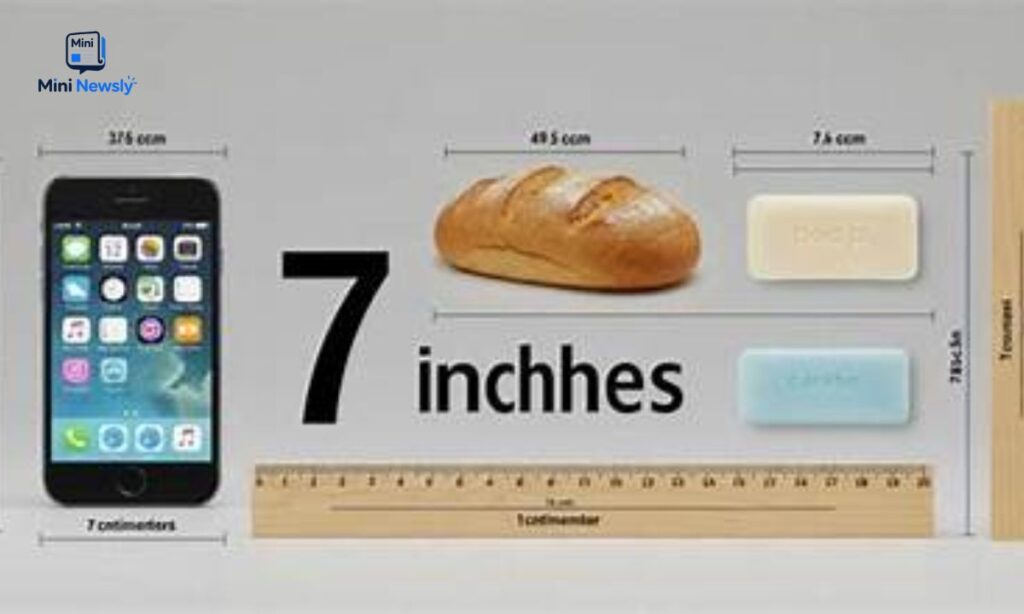
Ever stared at a product listing that says seven inches and had zero clue what that actually looks like? You’re not alone, and this guide fixes that fast. 7 inches is a length you already touch every day without even noticing it. Once you learn to spot it, you stop guessing and start knowing.
This article walks you through 22 real objects, from your kitchen drawer to your pocket, that all land close to this exact size.
What Is 7 Inches
7 inches is a length measurement equal to 17.78 centimeters, which puts it just past the halfway mark of a foot.
That in between sizes is exactly why it feels so natural in your hand. It is long enough to be useful, short enough to stay easy to control, which is why so many everyday tools quietly land near 7 inches without you ever noticing the pattern.
Quick Conversion of 7 Inches
Before we get into examples, here are the numbers so you never need a converter app again. Seven inches equals 17.78 centimeters, 177.8 millimeters, and about 0.58 feet. Keep those figures in mind as you read, since they explain why this size keeps showing up across such different categories of objects.
How Long Is 7 Inches? A Real World Feel
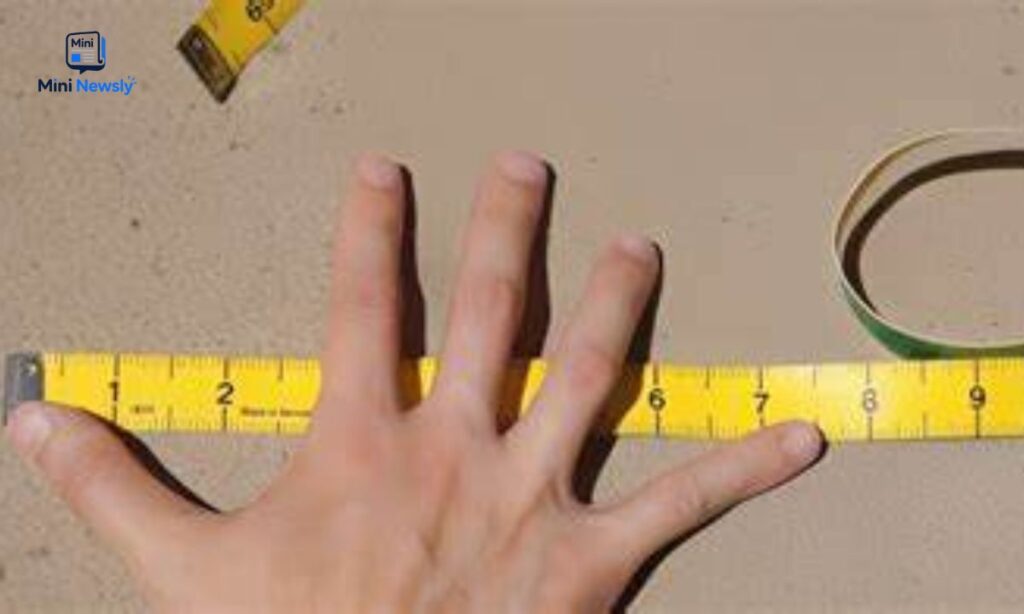
Numbers alone rarely stick in your brain the way objects do. Stretch your hand out and look at the length from your wrist crease to your middle fingertip, and for most adults that lands close to 7 inches. That means your own hand works as a built in measuring tool, and it is one you carry with you everywhere, which makes 7 inch estimation a skill you can practice constantly without trying too hard.
Household and Kitchen Items That Measure Around 7 Inches
Your kitchen drawer is basically a hidden 7 inch measurement kit, and once you start checking, you will find several matches sitting right there.
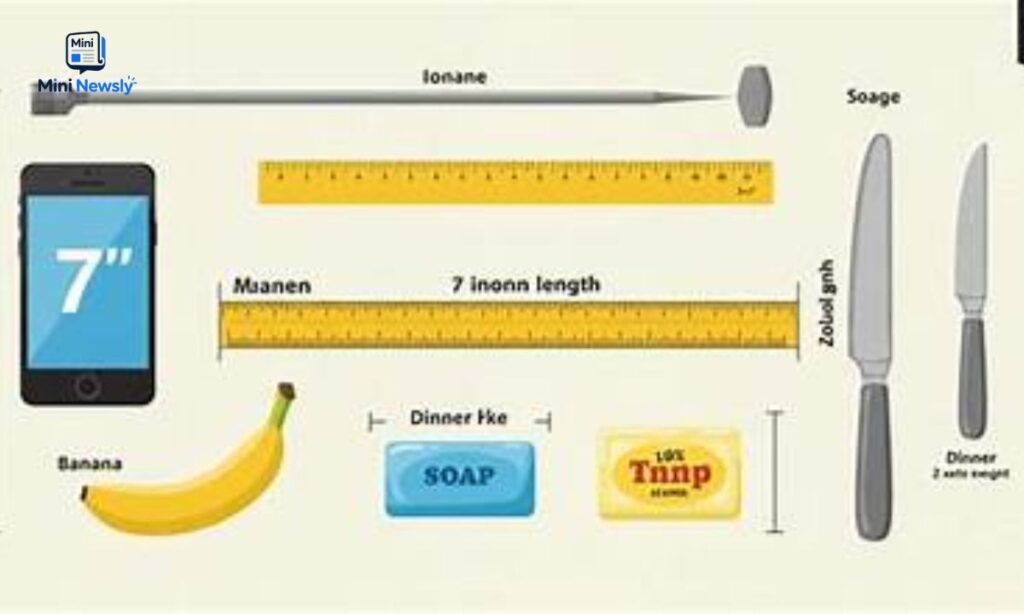
A standard butter knife usually measures close to 7 inches long, built that way so it stays easy to grip while still spreading butter across a full slice without a mess. Right next to it, a smaller flipping spatula, the kind used for eggs or pancakes, often lands in that same range, short enough to manage near heat but long enough to keep your fingers safe.
A salad fork tends to run shorter than a regular dinner fork, and it usually settles close to 7 inches as well, since lighter bites call for a shorter, more controlled reach. If you grab a small dessert plate and measure straight across the middle, many of those plates land near 7 inches wide too, which is exactly the right size for a slice of cake without making the food look tiny and lost.
Even a compact prep knife, the kind used for trimming vegetables rather than heavy chopping, often measures close to 7 inches total when you include blade and handle together, along with kitchen tongs, which frequently stretch to a similar length for comfortable grilling and serving.
7 Inch Measurement in Everyday Design
Ever wonder why so many random tools feel like they just fit right in your hand? That is not an accident at all.
Product designers build countless items around the 7 inch measurement because it matches average hand size and comfortable grip, and once you notice this pattern in one object, you start spotting it everywhere else too.
Tech and Gadgets Close to 7 Inches
Big screen smartphones, especially the larger Pro Max or Ultra style models, often have a diagonal screen size that lands close to 7 inches, measured corner to corner rather than by the height of the phone itself. Compact tablets and e readers follow a similar pattern, usually built around a 7 inch screen that stays small enough for one hand while still being big enough that you are not squinting at tiny text during a long train ride.
Most slim television remotes measure somewhere close to 7 inches long as well, and that length gives your fingers enough room to reach every button without stretching your hand into an awkward position.
Office and School Items That Match 7 Inches
A fresh pencil starts out a little longer, but after normal use and a few trips through the sharpener, it settles close to 7 inches, making it one of the easiest 7 inch objects to grab for a quick check at your desk. A single paper clip actually measures about 1.4 inches, not a full inch like most people assume, so lining up five of them gets you close to 7 inches, a handy trick when you are stuck without a ruler nearby.
The metal scoop on a small hand garden trowel often measures close to 7 inches too, small enough for tight planting spaces yet strong enough to dig a real hole, and office scissors built for everyday cutting usually land in that same range, giving you enough blade for clean lines while staying easy to control.
Food Items That Naturally Measure Around 7 Inches
A small to medium banana is one of nature’s most reliable 7 inch objects, and grabbing one from your fruit bowl gives you an instant, no cost size reference whenever you need one.
Grocery store carrots are graded for size, and a standard carrot often lands close to 7 inches as well, since farmers keep this size consistent so bagged carrots look uniform on the shelf. Regular hot dogs usually run closer to five or six inches, though jumbo or foot long styles can stretch closer to 7 inches or beyond, which makes for a fun debate at your next backyard cookout.
Personal and Everyday Items That Match 7 Inches
Most toothbrush handles measure close to 7 inches, giving you enough grip room while still reaching every corner of your mouth comfortably during brushing.
From your wrist crease to your middle fingertip, the average adult hand lands near 7 inches too, though it is worth knowing that wrist to knuckle alone is shorter, so measure to the fingertip if you want an accurate 7 inch guide. A classic 5×7 picture frame has one side that measures exactly 7 inches, making it one of the few items on this list that hits the number precisely rather than just approximately.
If you look at any standard 12 inch ruler, 7 inches sits just past the halfway point, right after the six and before the eight, which is worth knowing next time you need a quick visual check. Two credit cards placed end to end come out to about 6.7 inches, close to 7 inches but not exact, and seven US quarters lined up edge to edge measure about the same, handy tricks for a rough estimate when you have spare change but no ruler around.
Also, read this blog: 3 Inches Explained with 20 Common Everyday Items
Case Study: How Size Awareness Saved One Online Order
A shopper once wanted a small desk organizer, and the listing simply said 7 inches long with no other context to go on. The product photos looked bigger than they actually were, and there was no ruler around to double check before buying.
Instead of guessing blindly, the shopper grabbed a toothbrush and a pencil, laid them next to where the organizer would sit, and compared the space carefully. One object alone can trick your eyes, but two objects checking each other rarely do, and this simple habit revealed that the organizer would actually be too small for what they needed.
They skipped the order, avoided a frustrating return, and picked a larger option instead with full confidence. The whole lesson here is simple, once you know your own set of 7 inch objects, sizing mistakes while shopping online drop fast.
Fun Facts About 7 Inches
A classic vinyl record called a seven inch single is literally named for its diameter, and a slice of bread folded in half often measures close to 7 inches across. Small display prints in photography are also frequently sized near 7 inches, since that size shows off detail nicely without taking up much wall space.
How to Measure 7 Inches Without a Ruler
A pencil works as a solid baseline since most land close to 7 inches, and your phone’s diagonal screen size gives you another quick comparison point. Stretching your hand from wrist to fingertip offers a third option, and lining up five paper clips or seven quarters rounds out a fourth for whenever you need a fast, tool free check.
None of these methods are lab accurate, but every single one gets you close enough for everyday decisions like shopping or quick home projects.
Why Understanding 7 Inches Matters in Daily Life
This kind of size awareness shows up more often than most people expect. It helps most during online shopping, where comparing against real objects instead of trusting photos alone prevents costly return shipping.
It also helps with quick DIY projects when a tape measure is nowhere in sight, with cooking when you are sizing up plates or portions on the fly, and with packing for travel when every inch of suitcase space actually counts.
Interactive Challenge: Spot 7 Inches Around You
Look around right now and grab three items within arm’s reach, then guess whether each one is close to 7 inches before checking anything. Compare your guesses against a toothbrush or pencil afterward to see just how sharp your eye really is.
Quick Reference Table
| Item | Approx Length |
| Standard pencil | ~7 inches |
| Toothbrush | ~7 inches |
| Butter knife | ~7 inches |
| Small banana | ~7 inches |
| Hand, wrist to fingertip | ~7 inches |
| 5×7 picture frame side | exactly 7 inches |
Conclusion
You do not need a toolbox to understand 7 inches, just a handful of familiar objects and a little practice comparing them side by side. Once you connect this length to things you already touch every day, from a toothbrush to a picture frame, you will start estimating sizes almost without thinking about it.
Try it out the next time you shop online and see how close your guess lands. Got a favorite 7 inch object we missed? Drop it in the comments and help other readers build their own mental ruler too.

Welcome to mininewsly.com, your trusted source for grammar tips and text meanings. I have over 4 years of experience in the grammar and text meaning niche. My goal is to provide clear, accurate, and easy-to-understand content for every reader. Thank you for visiting, and I hope my articles help you learn with confidence.