
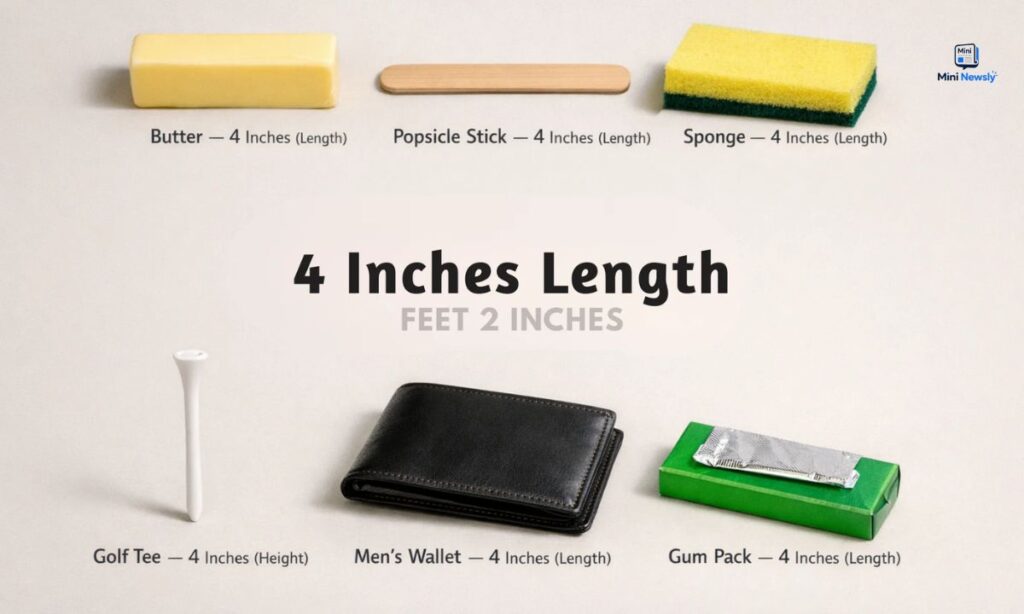
Four inches is 10.16 centimeters, or just about the width of your palm if you’re an average-sized adult. That’s the short answer. If you’ve ever stood in a hardware store aisle trying to figure out if a hook or bracket will actually fit your space without a tape measure handy, you already know why this matters more than it sounds like it should.
The rest of this guide gives you real, checkable objects that hit (or come very close to) the 4 inch mark, so you’ve got a mental ruler in your back pocket next time you need one.
Why People Search For “How Long Is 4 Inches”
Most people typing this into Google aren’t curious for fun. They’re mid-project, phone in one hand, trying to eyeball a measurement before they buy the wrong size online or cut something too short.I ran into this myself last year hanging floating shelves in a rental apartment. The bracket spec sheet said “4 inch clearance from the top” and I had zero tools on me except my phone and a coffee mug.
That’s the real use case here. You’re not memorizing inches for trivia night, you’re solving a five-minute problem with whatever’s already in the room, and you want it to actually be close enough that you don’t have to redo the work.This guide is built around that exact moment, with objects people actually have lying around, not abstract comparisons that sound nice but don’t help when you’re standing in your kitchen.
Everyday Objects That Are Close to 4 Inches Long
These are the ones I’d trust if I had to estimate 4 inches on the spot, ranked by how often you’d realistically have one nearby.
A standard smartphone, measured across the width (not height)
Most phones today land between 2.6 and 3.1 inches across, so this one’s closer to 3 inches and not a great match on its own, but stack a phone case width on top and you’re nearly there.
A business card, the long edge.
Standard size is 3.5 x 2 inches, so it’s just under 4 inches, close enough that most people clock it as “about 4 inches” without a second thought.
Two AA batteries end to end
Each AA battery is about 1.97 inches long, so two of them lined up come out to almost exactly 4 inches, and this is genuinely one of the most accurate household comparisons you’ll find.
A standard sticky note pad, unopened
A fresh stack of 3×3 sticky notes is usually close to 1.5 inches thick, so you’d need a few pads stacked, but a fresh 4×4 sticky note pad measures close to 4 inches per side, which makes it a clean, exact match.
A small mason jar, the 4 oz size.
These are sold specifically as “4 oz mason jars” and most run almost exactly 4 inches tall from base to lid, which makes them one of the most reliable references on this whole list since the size is basically baked into the product name.
A C-size battery.
Less common in drawers these days, but a single C battery measures close to 1.97 inches, so two end to end again land you near 4 inches, similar to the AA trick.
A standard light switch plate, width-wise.
Most single light switch covers measure 2.75 inches wide, so this one runs short, but a double switch plate cover comes in around 4.5 inches, putting it just slightly over.
A votive candle, the wider jar-style ones.

Standard glass votive candle holders often run close to 3 to 4 inches tall depending on the brand, making this a decent everyday visual if you’ve got one on a shelf.
A travel-size toothpaste tube, fully rolled out flat.
These tubes are usually labeled around 3 to 4.5 inches depending on the brand, and TSA-approved travel sizes tend to land right in that 4 inch range when laid flat.
A standard door key.

Most house keys run between 2.5 and 3 inches, so this one’s actually shorter than 4 inches, worth mentioning here only because people often guess wrong and assume keys are bigger than they are.
Half of a standard pencil before sharpening.
A new, unsharpened pencil is 7.5 inches long, so half of it lands close to 3.75 inches, just shy of 4 but close enough for a fast visual check.
A 4 inch masonry nail or construction screw.
These are sold by the literal inch measurement, so a “4 inch nail” at the hardware store is exactly that, no guessing involved, which makes it the single most accurate reference on this list if you’ve got a toolbox nearby.
Also read this Blog: How Long Is 5 Inches? 17 Common Objects That Are About 5 Inches Long
A small kitchen paring knife blade.
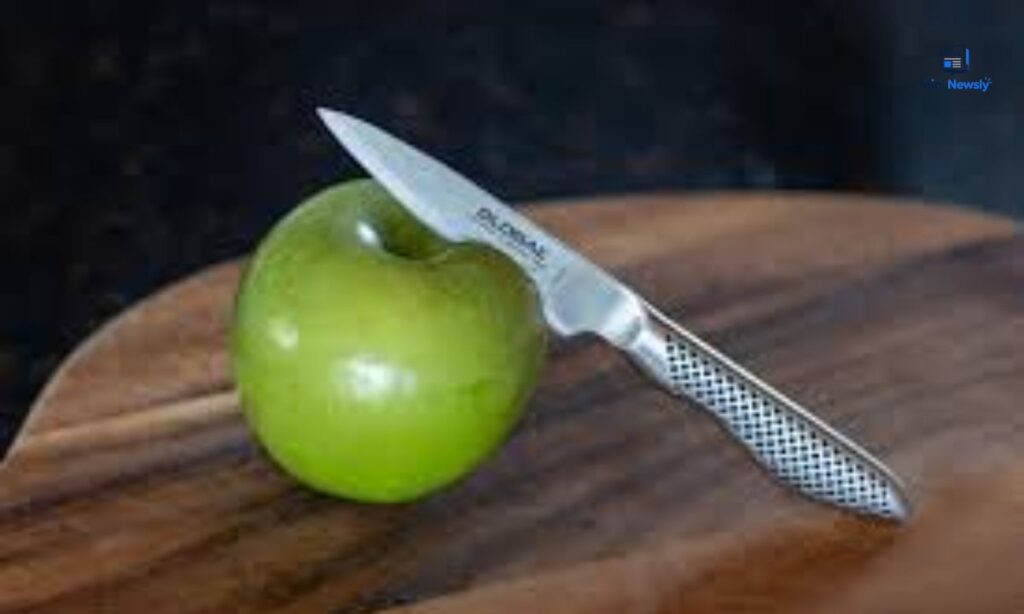
Paring knife blades are commonly sold in the 3.5 to 4 inch range specifically because that’s the ergonomic sweet spot for trimming and peeling tasks.
A standard golf tee.
Regular golf tees measure right around 2.75 inches, while the longer “fairway” tees used for drivers run closer to 4 inches, so the longer style is your better visual match here.
A juice box, the standard 6.75 oz size, measured tall.
These boxes typically stand close to 4 inches tall, which is part of why they’re sized to fit perfectly into most kids’ lunch boxes and cup holders.
A AAA battery doubled up.
A single AAA battery is about 1.75 inches, so two end to end land closer to 3.5 inches, a touch short of 4 but still a usable quick check.
A standard Post-it Super Sticky note pad, the larger 4×6 size folded in half.
Folding the 6 inch side in half gets you exactly 3 inches, not 4, so this one’s actually a common miscalculation people make, worth flagging so you don’t repeat it.
A small notebook, the pocket Moleskine size, measured across the width.
These run 3.5 inches wide on the standard pocket version, just under 4 and a very common item to have in a bag or desk drawer.
A 4 inch drywall taping knife.
Like the construction nail above, this tool is manufactured and sold specifically at the 4 inch blade width, so it’s another exact match if you do any home repair work.
Items People Often Get Wrong As “4 Inches”
Worth being upfront about this since it’s where a lot of size guides mess up.
A credit card is not 4 inches. The actual standard size set by ISO 7810 is 3.370 inches long, which is over half an inch short of 4, and rounding it up causes more measuring mistakes than it solves.A standard playing card runs about 3.5 inches on the long edge, again noticeably short of the mark, even though it gets repeated constantly in size comparison lists online.
The reason these two keep showing up everywhere isn’t accuracy, it’s familiarity. Writers reach for them because everyone’s held one, not because the math checks out, and that’s exactly the kind of shortcut that makes a measuring guide less useful instead of more.If you’ve read this comparison elsewhere with a credit card or playing card listed as “close to 4 inches,” that’s worth double-checking before you rely on it for anything that actually needs to fit.
How To Estimate 4 Inches Without A Ruler
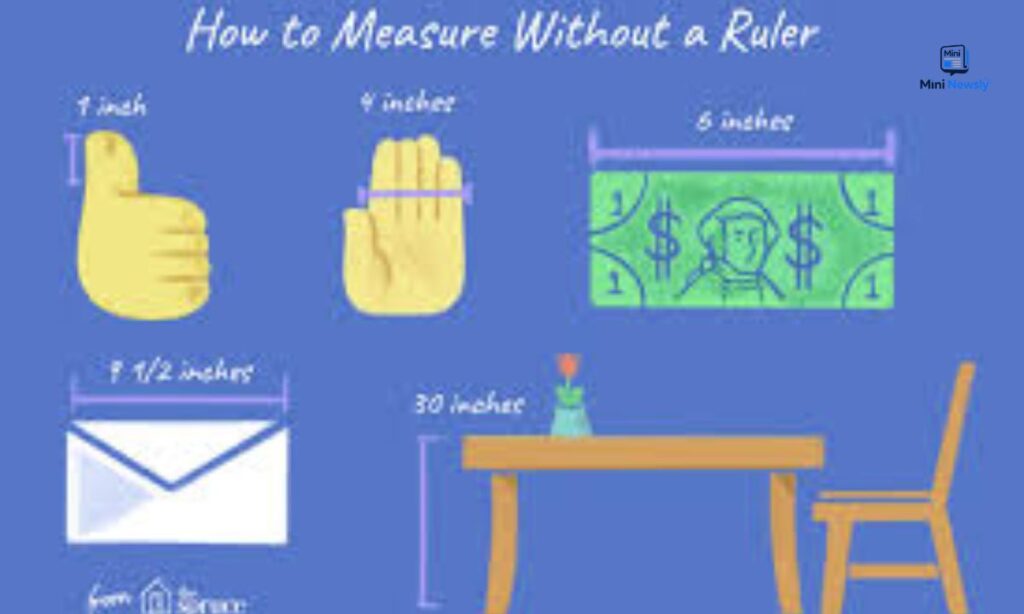
If none of the objects above are within reach, there’s still a decent backup method using your own hand.Most adults’ index finger, measured from the base of the palm to the tip, runs somewhere close to 3 to 4 inches depending on hand size, so it’s worth measuring your own finger once with an actual ruler and remembering the number.Once you know your personal measurement, your hand becomes a built-in tool you’re never without, which beats hunting for a tape measure every single time.
The trick only works if you calibrate it first though, since hand sizes vary enough that guessing without checking can throw you off by half an inch or more, and half an inch matters a lot when you’re drilling into a wall.A second backup option is your phone’s screen, since most phone screens have known exact dimensions you can look up in seconds, giving you a second built-in reference if your hand measurement isn’t handy.
Quick Conversion Reference For 4 Inches
| Unit | Value |
| Inches | 4 in |
| Centimeters | 10.16 cm |
| Millimeters | 101.6 mm |
| Feet | 0.33 ft |
| Yards | 0.11 yd |
| Meters | 0.1016 m |
Keep this table bookmarked if you deal with metric and imperial conversions often, since 4 inches comes up constantly in furniture specs, package dimensions, and home improvement projects where the listing only gives you one unit.
Where 4 Inches Actually Shows Up In Real Projects
This size isn’t random. It shows up in construction and product design because it sits right at a useful middle ground, big enough to matter, small enough to handle with one hand. Door hardware is a good example. Standard deadbolt backsets and strike plate spacing often land in this range, which is why contractors keep a 4 inch reference memorized instead of measuring it fresh every time.
Kitchen tools follow the same logic. Paring knives, small spice jars, and mini measuring cups all cluster around 4 inches because that’s the size your hand naturally wants to grip for short, controlled tasks. If you’ve ever wondered why so many small tools and containers seem to land in this exact range, it’s not a coincidence, it’s ergonomics doing its job quietly in the background.
Conclusion
Four inches is small, but it shows up everywhere. Once you know a few real objects that match it, you stop guessing. A mason jar, a nail, two batteries end to end. That’s all you need.Skip the credit card trick next time. It’s close, but not close enough. Keep this page handy, and you’ll never be stuck without a ruler again.

Welcome to mininewsly.com, your trusted source for grammar tips and text meanings. I have over 4 years of experience in the grammar and text meaning niche. My goal is to provide clear, accurate, and easy-to-understand content for every reader. Thank you for visiting, and I hope my articles help you learn with confidence.